
All-in-one car seats aren’t just clever marketing. Many parents assume they’re trying to do too much—like a jack-of-all-trades but master of none. But here’s the thing: when designed right, all-in-one car seats can be one of the smartest, safest, and most budget-friendly choices you’ll ever make for your child. They grow with your baby, save you from buying multiple seats, and simplify your life.
🛡️ According to the American Academy of Pediatrics, motor vehicle crashes are still the leading cause of death for children 4 years and older, which makes choosing a safe, long-term car seat even more important.
What Is an All-in-One Car Seat and Why Parents Love It
An all-in-one car seat is designed to grow with your child — from the baby days to the booster seat stage. Instead of buying three seats (an infant seat, a convertible seat, and a booster), you buy one seat that handles everything. Pretty clever, right?
Here’s how it works:
- Rear-facing mode for infants and babies (usually 5–40 lbs)
- Forward-facing mode for toddlers and preschoolers (up to 65 lbs)
- Booster mode for big kids (often up to 100 lbs or more)
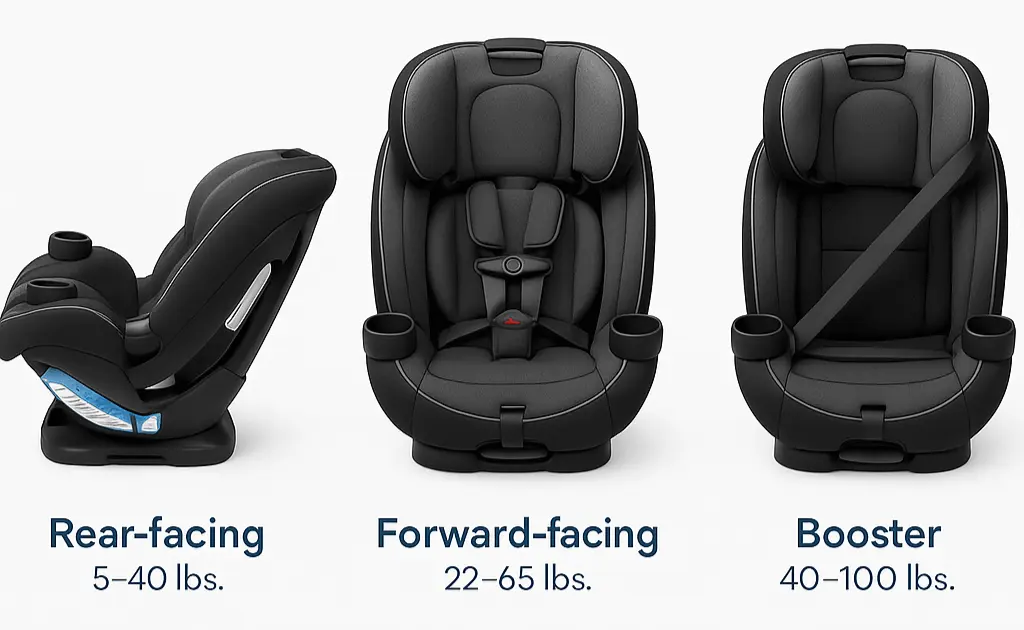
That’s why it’s often called a “grow with me car seat” or a “baby to booster car seat.” It saves space, time, money — and, let’s be honest, decision fatigue.
Many parents also search for the best all-in-one car seat for newborn to toddler — and that’s the beauty of this seat. You strap your newborn in on day one, and you might still be using the same seat when they’re in grade school. Talk about long-term value.
And yes, quality and safety are still there. Top brands design these seats to meet or exceed safety standards, and many include side-impact protection, no-rethread harness systems, and multi-position recline options to grow with your child comfortably.
In a nutshell:
If you’re tired of the car seat upgrade cycle every couple of years, or you want one solid investment that keeps your child safe through every stage, an all-in-one seat is your new best friend.
How Long Can You Use an All-in-One Car Seat?
Short answer? A long time.
But let’s dig into the details because “long” can mean different things depending on your child’s size, the specific seat model, and how well it holds up over time.
Most multi-use car seats are designed to cover your child from birth (or at least 5 lbs) up to 100–120 lbs. That usually means you’re looking at a 10-year usable lifespan, depending on the seat’s expiration date set by the manufacturer. Yes, car seats expire around the 10-year mark from the manufacturing date because materials break down and safety tech changes.
One Seat For Every Stage Of Childhood
Here’s a rough breakdown of how long you’ll use each stage:
- Rear-facing: From birth to about age 2 (or longer if your child still fits safely — which is best for crash protection).
- Forward-facing with harness: From age 2 to around age 5 or 6.
- Belt-positioning booster mode: From age 5 or 6 up to 8–12 years old, depending on height and weight.

So when someone asks, “How long can a child use an all-in-one car seat?” the answer is — with the right seat and proper care — from the ride home from the hospital to the last booster ride before the seatbelt fits properly.
Now, don’t forget: every child grows differently, and not all seats are built the same. Some are more compact (better for small cars), while others are bulkier but built for extended rear-facing. Always double-check the labels and your vehicle’s compatibility.
Also, some parents worry about the comfort and support for different age groups. Good news: the best all-in-one car seats come with infant inserts for newborns, which are removable as your child grows. Plus, adjustable headrests and multiple recline angles help make things more comfortable through every stage.
💡 Important Reminder:
As your child grows and you switch between modes, always follow the manufacturer’s guidelines and your local child passenger safety laws. Each state or country has specific legal requirements for rear-facing, forward-facing, and booster seats. Ensuring you’re aligned with the legal minimums and best safety practices keeps your child safer and avoids penalties.
Quick Tip:
Look for seats with clearly marked stage guides and color-coded belt paths. These little things make life much easier when switching modes — especially for first-timers.
All-in-One vs. Convertible Car Seats – What’s the Difference?
Okay, here’s a quick confession: “convertible car seat“ and “all-in-one car seat” get thrown around like they mean the same thing. But they’re not.
Think of it like this:
- A convertible car seat usually does two things: it works rear-facing for infants and toddlers, and then flips to forward-facing when your child grows.
- An all-in-one car seat does that and becomes a booster seat later. So it gives you three stages in one seat.
That’s why it’s also called a 3-in-1 car seat, 4-in-1 car seat, or even a baby booster car seat.
Are All-in-One Car Seats Worth the Money?
Let’s be honest — car seats aren’t cheap. And seeing the price tag on some of the top-rated all-in-one car seats can make your wallet sweat a little.
So the big question is whether they are worth the money.
Yep — and here’s why.
When you buy an all-in-one convertible car seat, you’re buying for the long haul. You cover every stage, from the newborn rear-facing phase to the final booster seat stage. That’s up to 10 years of use from one product.
Now let’s look at what you’d spend if you bought each seat separately:
- Infant car seat: $100–$250
- Convertible seat: $150–$300
- Booster seat: $50–$150
Add that up, and you’re easily spending $300–$700 over the years — often more.
Compare that to a good all-in-one car seat, which might cost $200–$400 upfront, and you can see how it quickly starts to pay for itself.
Plus, it’s not just about the money. It’s about the convenience, too.
One seat. One installation. One set of instructions. That’s much less stressful, especially for new parents with many things to juggle.
And for budget-conscious families looking for value car seats, plenty of affordable all-in-one options are on the market now that don’t sacrifice safety or comfort. You don’t need to splurge on a luxury model to get something solid and safe.
Quick reality check:
No car seat lasts forever, but if you take care of it — clean it regularly, store it properly when not in use, and keep an eye on the expiration date — it’ll last you through every stage your child needs.
Pros and Cons of All-in-One Car Seats: What No One Tells You
Alright, let’s break it down.
Sure, all-in-one car seats sound like a dream — but are they as perfect as they seem?
Let’s look at both sides — the good and the “wish-I-knew-this-earlier” stuff — so you can decide if it’s right for you.
✅ The Pros
1. One Purchase = Years of Use
From the first ride home to the booster seat years, it’s one seat that keeps up with your growing child. That’s why it’s called a car seat that grows with your child.
2. Cost-Effective in the Long Run
Instead of buying three different seats over time, you pay once, and you’re done. Many parents searching for a budget all-in-one car seat find this route much more affordable.
3. Consistency for Your Child
The seat, padding, and fit are all the same. Your child gets used to it, which can make car rides easier and safer over time.
4. Less Waste and Storage Hassle
You’re not tossing out a seat every few years or trying to find room in the garage. One seat, one space.
5. Modern Features and Safety
Today’s best all-in-one convertible car seats include top-notch safety features like side-impact protection, steel-reinforced frames, and adjustable recline for every stage.
❌ The Cons
1. They’re Big and Bulky
Let’s be honest — these seats are chunky. You may have a tight squeeze if you have a small car or need to fit three across. Not all models are narrow all-in-one car seats.
2. Not Ideal for Travel
They’re not precisely airport-friendly. If you travel a lot or swap vehicles often, a smaller infant seat might be more convenient initially.
3. Booster Fit Isn’t Always Perfect
While they convert into boosters, some don’t fit older kids or standalone booster seats. A dedicated booster can give a better seatbelt fit.
4. Install Once, Cry Later
Installing one isn’t bad until you uninstall it for cleaning or car seat checks. These babies are heavy. You’ll feel it.
5. May Not Fit Newborns Comfortably
Yes, they’re marketed for “from birth,” — but not all models have enough padding or proper recline for tiny newborns. It’s something to watch for.
Who Should Buy an All-in-One Car Seat (And Who Shouldn’t)
Let’s get real for a second — not every family needs an all-in-one car seat, and that’s okay.
Here’s a simple way to decide if it’s right for you.
✅ You Should Buy One If
- You want to buy one seat and be done with it.
- If simplicity and long-term value are your goals, this is a no-brainer.
- You’re on a budget but want something that lasts.
- Instead of buying multiple seats, get one that does it all. Perfect for value-focused parents.
- You don’t switch cars often.
- Got one leading family car? Install once and forget it. You’re golden.
- You want fewer decisions.
- No stress over “which seat comes next.” Just adjust as your child grows.
- You have a child who’s average in height and weight.
- Most all-in-one seats are built to fit the “average kid.” You’ll get the full use out of it.
❌ You Might Not Want One If
- You need a lightweight car seat for travel.
- Do you head to grandma’s often or fly a lot? All-in-one seats are tanks — not great for portability.
- You drive a compact car.
- Some of these seats are huge. You’ll need to check measurements carefully or look into compact all-in-one car seats.
- You plan to have kids close in age.
- You might need another if your second baby comes before the first outgrows the seat.
- You’re all about premium comfort.
- While many all-in-one seats are comfy, they don’t always offer the same plush feel as some high-end, stage-specific models.
- Your child is above average in height or weight.
- Some all-in-one seats max out earlier than standalone boosters or extended rear-facing seats.
Installation Tips: Make Sure You’re Doing It Right
So you finally picked your all-in-one car seat — awesome! 🎉
But hold up now; the part that matters is installing it correctly.
A car seat is only as safe as how it’s installed. And trust us — even the best seat won’t protect your little one if it’s loose, tilted, or buckled the wrong way. Let’s walk through the key steps and tips every parent should know.
🧩 LATCH vs. Seatbelt vs. Tether: What’s Best?
Each installation method has its purpose depending on your child’s age and car seat mode:
| Mode | LATCH | Seatbelt | Top Tether | |
|---|---|---|---|---|
| Rear-facing Infant | ✅ | ✅ | ❌ | |
| Forward-facing | ✅ | ✅ | ✅ | |
| Booster Mode | ❌ | ✅ | ✅ |
- LATCH: Super helpful for quick, easy installs — but it has weight limits (usually 65 lbs combined child + seat). Check your manual.
- Seatbelt: Always a safe backup and is required when your child or seat exceeds the LATCH limit.
- Top Tether: Crucial for forward-facing. It helps prevent head injuries in a crash.
For a detailed installation guide, visit 👇
💡 Pro tip: If you’re unsure about your car seat installation, visit a certified car seat inspection station through NHTSA — many fire stations, hospitals, and safety centers offer this service for free.
🔧 Tips for Getting That Snug, Safe Fit
Here’s what you need to do to nail your car seat installation — without pulling your hair out.
- Read the manual (yes, really!)
- Every car seat brand is a little different. The manual will show you exact belt paths, weight limits, and how to adjust recline angles for each stage.
- Check your vehicle manual, too.
- It tells you where the LATCH anchors, top tether hooks, and safe seating positions are located in your car.
- Use your body weight.
- When tightening the seat, put your knee or press down with your hand to get it snug.
- Run the pinch test
- After buckling the harness, try to pinch the strap near your child’s collarbone. Can’t pinch anything? You’re good.
- Recheck after a few rides.
- Seats can loosen slightly after some use. Please give it a quick check weekly, especially during the first month.
⚠️ Common Mistakes Parents Make When Installing an All-in-One Car Seat
Even seasoned parents get tripped up here. Let’s clear the air:
- Loose installation: If the seat moves more than an inch side to side or front to back, it’s not tight enough.
- Wrong recline angle: This can cause breathing issues, especially in infants. Use that recline line or bubble level indicator!
- Twisted straps: Straps should lie flat — twists can mess with the seat’s performance in a crash.
- Harness too loose: A snug harness passes the “pinch test” — you shouldn’t be able to pinch any slack at the shoulder.
- LATCH + seatbelt: Pick one, not both (unless your seat and car explicitly allow it — rare!).
- Using the wrong belt path: Rear-facing and forward-facing use different belt paths. Check your manual to avoid this.
Frequently Asked Questions
What is an all-in-one car seat?
An all-in-one car seat is a single car seat designed to grow with your child through all three major stages: rear-facing for infants, forward-facing with a harness for toddlers, and belt-positioning booster for older kids. It’s a 3-in-1 or even 4-in-1 solution that saves you from buying multiple seats as your child grows.
Are all-in-one car seats safe for newborns?
All-in-one car seats are designed to be safe for newborns, provided they meet current safety standards and are installed correctly. Look for models with infant inserts, good side-impact protection, and a deep recline for proper newborn positioning.
Are all-in-one car seats better than infant car seats?
Not always. Infant car seats are usually more portable and stroller-compatible, while all-in-one seats are larger and stay installed in the vehicle. Many parents prefer infant seats for the newborn stage and switch later. However, all-in-one car seats can be a better choice for parents who want a long-term solution, higher weight limits, fewer seat upgrades, and a seat that stays securely installed in the vehicle for years.
When should you switch from an infant seat to an all-in-one car seat?
Parents usually switch when their child outgrows the infant seat’s height or weight limit, often around the first year.
Are all-in-one car seats hard to install?
Modern all-in-one car seats often include easy-install features such as lock-offs, level indicators, and no-rethread harness systems. However, proper installation still requires careful attention to the manual.
Can you use an all-in-one car seat as a travel system?
Most all-in-one car seats do not attach to strollers as infant car seats do. They are generally meant to stay installed in the car.
Final Thoughts: Is an All-in-One Car Seat Right for You?
So, is the all-in-one car seat the smart move?
The answer for most parents — especially those who want a one-and-done solution — is a solid yes.
You get value, long-term use, and less hassle. It’s great for growing with your child and keeps you from bouncing between different seats every few years.
But remember — no product is perfect. These seats can be bulky, tricky to move around, and might not fit tiny newborns just right. So before you click “buy now,” think about your:
- Car size
- Budget
- Lifestyle
- Child’s size and needs
The goal isn’t just to buy the most popular seat — it’s to buy the right seat for your family.
Whether you’re a first-time parent or upgrading from a convertible seat, an all-in-one might check all your boxes.