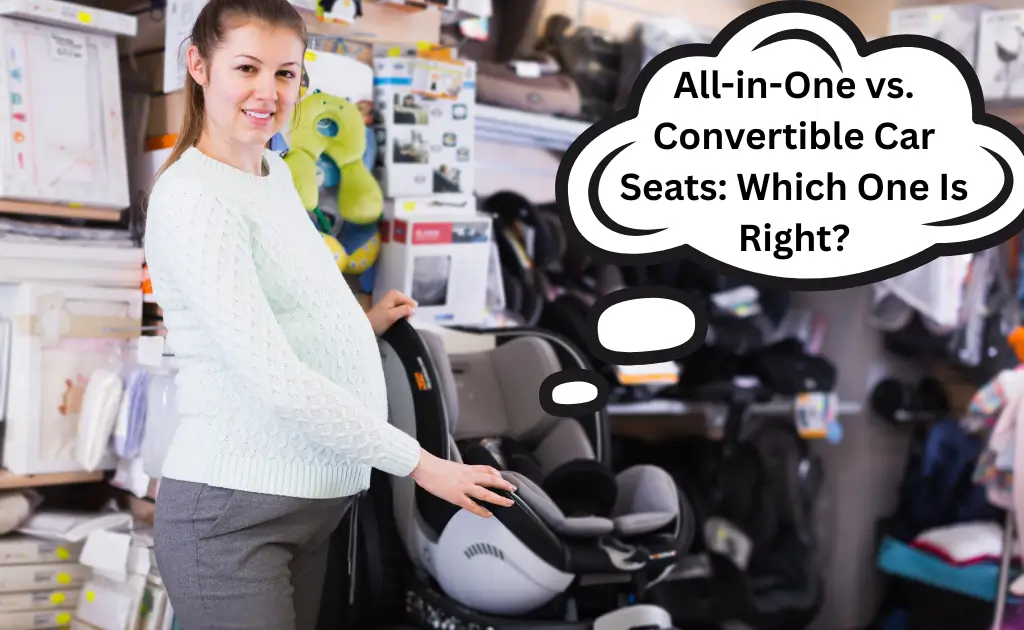
You’ve probably heard this: “Just grab an all-One’s car seat, and you’re done!
” Sounds great,” right? One seat to rule them all. But that advice isn’t always one-size-fits-all when it comes to all-in-one vs. convertible car seats. Sure, an all-in-one car seat will grow with your child from infant to booster. But is that the best fit for every family?
But here’s the thing — it’s not always that simple.
While an all-in-one car seat seems like the ultimate convenience, it’s not automatically better than a convertible car seat. Depending on your budget, car size, and daily routine, one might make way more sense than the other.
In this blog, we will break things down in a way that helps you choose what’s right for your family. No jargon. No confusion. Just a real talk about what makes these two car seat options different — and which one fits your needs best.
What Is an All-in-One Car Seat?
Think of an all-in-one car seat like the Swiss Army knife of baby gear. It’s designed to grow with your child from the moment they leave the hospital until they’re big enough to ride in a regular seat — no more switching seats every few years.
✅ Three Main Stages of an All-in-One Car Seat
It’s a car seat that transforms through three (or sometimes four) key stages:
- Rear-facing infant seat (usually from 4 to 40 lbs).
- Forward-facing seat with a harness (up to 65 lbs).
- High-back or backless booster seat (up to 100–120 lbs, depending on the model).
Some even market themselves as 4-in-1 car seats, adding an extended rear-facing stage or an additional booster setup.
The following are the Pros and Cons of an All-in-One Car Seat.
🚗 Why Parents Love It
The following are the pros of all-in-all car seats:
- No need to buy multiple seats as your child grows
- It feels like a smart investment upfront (and it can be!).
- Many come loaded with comfort and safety features.
- Good for parents who want a “set it and forget it” solution
🤔 But Is It One-and-Done?
Here’s the deal: while all-in-one car seats sound perfect on paper, there are a few things to keep in mind:
- They’re big. Some models may not fit well in compact cars, especially in rear-facing mode.
- Bulky doesn’t mean easy. Switching between stages isn’t always super smooth — installation matters.
- They may not fit newborns snugly. Even if the label says 4 lbs, smaller babies sometimes don’t sit securely enough.
What’s a Convertible Car Seat?
A convertible car seat starts out rear-facing for babies and then switches to forward-facing for toddlers — and that’s about it. It doesn’t convert into a booster seat, which means at some point, you’ll need to buy another seat down the road.
✅ Two Main Stages of a Convertible Car Seat:
- Rear-facing mode – great for newborns and infants (usually from 5 lbs to around 40 lbs)
- Forward-facing mode with harness – for toddlers and preschoolers (up to around 65 lbs)
💡Why Some Parents Choose Convertible Seats
The following are the pros of convertible car seats:
- They’re less bulky than all-in-one seats.
- Typically easier to install and move between cars
- Costs less than all-in-one models upfront.
- Great if you plan to buy a separate booster later
So, if you like the idea of a seat that covers the early years (but not every stage) — and you’re okay buying a booster later — a convertible seat is a smart, flexible choice.
🤔 But What’s the Catch with Convertible Car Seats?
Here’s the deal: while convertible car seats are super versatile, they’re not without a few downsides:
- Not always newborn-friendly. Even if they say they fit from 5 lbs, some don’t hug tiny babies the way infant car seats do.
- No carry-and-go option. Unlike infant seats, you can’t pop it out and click it into a stroller — it’s fixed in the car.
- You’ll still need a booster later. Most convertible seats don’t transition into boosters, so it’s not your forever seat.
- Takes up serious space. Rear-facing mode, especially, can crowd the back seat in smaller vehicles.
Key Differences Between All-in-One and Convertible Car Seats
Now let’s get down to it: how do these two stack up?
Here’s a quick comparison to make your decision easier:
| Feature | All-in-One Car Seat | Convertible Car Seat |
|---|---|---|
| Usage Stages | 1. Rear-facing 2. Forward-facing 3. Booster | 1. Rear-facing 2. Forward-facing |
| Lifespan | Up to 10 years (depending on brand) | 4–7 years (approx.) |
| Size | Bulkier, may not fit well in small cars | More compact and lightweight |
| Installation Complexity | May require multiple adjustments over time | Generally simpler to install |
| Cost | Higher upfront, better long-term value | Lower cost, but needs booster later |
| Safety | Often includes side-impact protection, anti-rebound bar, and energy-absorbing foam | Includes standard safety; features vary by model |
| Ideal For | Long-term use, fewer purchases | Budget-friendly early-stage use |
🧐 Which One’s Right for You?
Here’s the key: it’s not about which is “better” — it’s about what works best for your lifestyle.
- Got a smaller car or travel often? You might lean toward a convertible child seat.
- Want to invest once and be done? An all-in-one child seat could be your winner.
- Shopping on a tighter budget now? A convertible seat gets the job done for the early years.
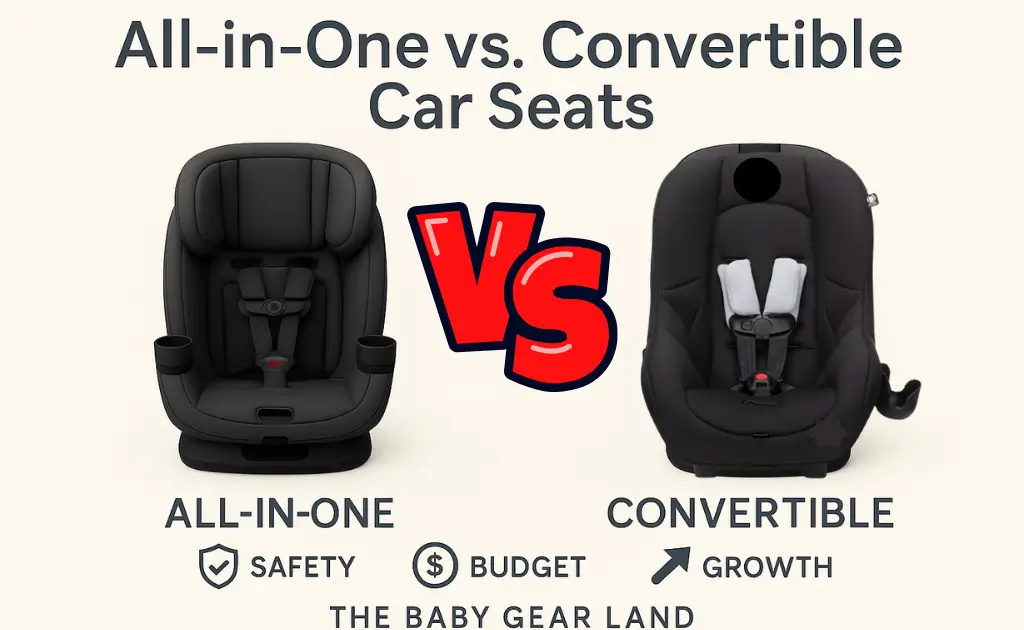
The following factors must be considered while analyzing all-in-one vs. convertible car seats to get the best fit for your kids.
1. Let’s Talk Money 💰
Okay, let’s be real — cost plays a huge role when buying baby gear. So, which seat gives you more bang for your buck?
💸 All-in-One Car Seats
Pay More Now, Save Later
All-in-one car seats often cost more upfront — we’re talking anywhere from $200 to $400 for popular brands like Graco, Britax, or Evenflo.
But here’s the deal: you’re paying once for a seat that could last your kid up to 10 years. No need to buy a separate infant seat, a convertible, and a booster. It’s all built in. So, in the long run? You could be saving money.
💲 Convertible Car Seats
Budget-Friendly Now, but Needs A Booster Later
Remember, a convertible car seat won’t turn into a booster seat later. So around preschool or kindergarten age, you’ll need to drop another $50–$100 on a booster.
If you’re tight on funds now or aren’t sure how long you’ll need the seat, a convertible might be the smarter short-term move.
🧮 All-in-One vs. Convertible Car Seats: Quick Cost Breakdown
| Seat Type | Initial Cost | Additional Seats Needed | Total Long-Term Cost |
|---|---|---|---|
| All-in-One Seat | $250–$400 | None | $250–$400 |
| Convertible seat | $150–$250 | Booster ($50–$100) | $200–$350 |
So yeah, both can be budget-friendly, depending on your plan.
2. What About Safety – Are Both Seats Equally Safe? 🛡️
Short answer? Yes — both seat types are safe when used correctly.
Every car seat sold in the U.S. must meet the same federal crash safety standards set by the National Highway Traffic Safety Administration NHTSA. So, whether you go for an all-in-one or a convertible, you’re not sacrificing safety — both meet strict government standards.
🛡️ All-in-One Car Seats
✈️ But what if you fly often?
If you’re a traveling family, not all car seats are approved for air travel. Many convertible car seats are Federal Aviation Administration (FAA)– approved, making them a solid pick if you take your little one on flights.
🛑 Convertible Car Seats
✈️ But what if you fly often
Some All-in-One car seats are also FAA-approved, but not all. Since they’re bulkier and designed to grow with your child, they may not always be the most practical for air travel, especially in rear-facing mode.
👉 Before you buy, double-check the product label or visit the FAA’s website to see if your model is approved for airplane use.
For air travel tips and guide, visit 👇
3. Longevity & Convenience – What About Everyday Use? 🍼⏳
Sure, budget and safety matter — but let’s talk about something you’ll deal with daily: how convenient is the seat?
⏱️All-in-One Car Seats
The Long Game
Think of an all-in-one car seat as the forever seat. It’s designed to last from day one until your child no longer needs a car seat — that’s up to 100 lbs or 10–12 years, depending on the model.
You don’t need to switch out seats or learn new installations. Just adjust as your child grows.
🔄 Convertible Car Seats
Easier in the Short Term
A convertible car seat is lighter, often easier to clean, and takes up less space.
It can be a huge plus if you plan to switch between cars.
But once your child grows out of the forward-facing mode, you’ll have to shop for a booster,
👨👩👧 Real-Life Parent Tip:
If convenience and fewer transitions matter more to you than portability, the all-in-one seat is hard to beat.
But if you’re all about easy handling right now and don’t mind future upgrades, go with the convertible.
4. Space-Saving and Vehicle Fit – Will It Fit in My Car? 🚗📏
Here’s a question too many parents forget to ask:
Will this car seat even fit in my car? 😅
🧳All-in-One Car Seats
Bulkier, but Versatile
All-in-one seats tend to be larger and heavier. They’re made to handle infants, toddlers, and older kids, so they’ve got more padding, bigger shells, and longer frames.
Driving a compact car or having multiple kids in car seats can be challenging.
Many brands now offer slimmer all-in-one car seats for smaller back seats, so always check dimensions before buying.
🪶 Convertible Car Seats
Great for Tight Spaces
Convertible car seats are more compact, making them ideal for:
- Small sedans
- Multi-seat setups (like 3-across)
- Grandparents’ or babysitters’ cars
They’re also easier to move between vehicles if needed.
A convertible seat may be the clear winner if space is at a premium.
5. Ease of Installation – How Hard Is Set Up and Switching Modes? 🔧🍼
Let’s face it — even the best car seat can become a pain if it’s hard to install or adjust. So, which type wins here?
🧩All-in-One Car Seats
More Features, More to Figure Out
All-in-one car seats come packed with features — rear-facing, forward-facing, booster mode — but all those options can make installation tricky.
Some parents say the initial setup takes longer because you have multiple recline angles, harness positions, and belt paths. And switching between modes (especially booster mode) can be confusing if the instructions aren’t crystal clear.
That said, premium all-in-one models now include:
- Clear level indicators
- Easy-to-read labels
- Built-in LATCH connectors
- Push-button adjustments
🪛 Convertible Car Seats
Great for Tight Spaces
Since convertible seats only switch between rear-facing and forward-facing, they’re naturally easier to install and less overwhelming for new parents.
Many models come with the following features:
- Click-tight installation,
- easy-twist knobs
- color-coded belt guides.
Convertibles win here if you’re the parent swapping the seat between cars often or just want a fuss-free experience.
6. Fit + Installation Matter More Than Type🧷
Here’s where things get real:
- A cheap seat installed correctly is safer than an expensive one used incorrectly.
- Some all-in-one models can be tricky to install, especially when switching between modes.
- Convertible seats are usually easier to handle, which can lead to fewer installations.
💬 Pro Tip: Choose What Fits Your Car + Your Kid
Sometimes, a seat may not fit well in your vehicle, especially in smaller sedans.
And if it doesn’t fit snugly, it’s not as safe. That’s why vehicle compatibility and harness adjustment are as important as crash test ratings.
Bonus: Look for seats with rigid LATCH, anti-rebound bars, or side-impact protection if you want extra peace of mind.
🧭 Quick Fit Tip:
Before you buy any seat, try this
Measure your back seat.
- Look up the car seat’s dimensions online.
- Read reviews about how it fits in specific car models.
Some brands even offer online fit guides for your exact vehicle.
Need help setting it up?
Explore a step-by-step installation guide in our blog: LATCH vs. Seat Belt Installation: Which One is Better? to make sure your all-in-one car seat is installed safely and correctly.
Frequently Asked Questions
What is the difference between an all-in-one car seat and a convertible car seat?
A convertible car seat typically covers only two stages (rear-facing and forward-facing), while an all-in-one includes a third booster mode. All-in-one car seats are more versatile and can be used longer.
What is the weight limit for an all-in-one car seat?
Most all-in-one car seats accommodate children from 5 to 100 or even 120 lbs, depending on the brand. Check the label for exact weight and height limits for each mode.
What if my child outgrows the all-in-one car seat early?
If your child is taller or heavier than average, you may need to switch to a dedicated high-back or backless booster earlier than expected. Always check your seat’s height and weight limits for each stage.
Can I use an all-in-one car seat for multiple kids?
Technically, yes — but only if it’s still in good condition, hasn’t expired, and hasn’t been in an accident. However, many parents keep the all-in-one for one child’s entire journey and then get another for their next baby.
How do I clean an all-in-one car seat?
Most car seats come with removable and washable seat pads. Use mild soap and water for cleaning; avoid bleach and harsh chemicals. Always refer to the cleaning instructions in your manual to preserve safety features.
You may visit our guide How to Clean a Baby Car Seat and Remove Tough Messes, for more details.
Final Verdict 🏁🎯
All-in-one vs. convertible car seats — which one comes out on top? The answer depends on your specific needs and parenting priorities.
💬🏆 Go for an All-in-One Car Seat If You Want:
✅ A single seat that grows with your child
✅ Long-term value (no need to buy multiple seats)
✅ Fewer transitions between car seat stages
✅ A more future-proof setup
👉 Perfect for parents who love the “buy it once and done” approach.
🥈 Choose a Convertible Car Seat If You Need:
B✅ A more compact or lightweight seat
✅ Lower upfront cost
✅ Simple installation for now
✅ Flexibility to pair with a travel system or infant carrier
👉 Ideal for families with limited space, multiple kids, or who don’t mind upgrading later.
💬 Final Word
There’s no one-size-fits-all answer.
What works for one family may not fit another — and that’s okay.
The key?
👉 Pick a car seat that fits your child’s size, car, and lifestyle.
Both all-in-one and convertible car seats are safe, smart, and widely loved. It all comes down to what you value most — longevity, ease of use, budget, or space-saving.