
As a parent, your top priority is keeping your little one safe in the car, and a booster car seat plays a vital role in that. Choosing the right one can feel complex and confusing. With so many options, how do you know which is best? And more importantly, when is the right time to switch from a car seat to a booster?
In this guide, we’ll answer all these questions in an easy-to-understand manner. We’ll discuss why booster seats are essential, how to pick the right one, and what mistakes parents often make when transitioning their kids to boosters.
What Is a Booster Car Seat & Why Does Your Child Need One?
A booster seat is used after a child outgrows a baby car seat but is not yet big enough for a regular seat belt. A booster car seat is designed to lift your child so that the car’s seat belt fits them properly—because standard seat belts are made for adults, not little kids. Without a booster, the seat belt can sit too high on the neck or too low on the stomach, which is dangerous in a crash.
Why Booster Seats Are Essential for Safety
Here’s the deal: Seat belts are built for adults, not kids. If a child isn’t sitting at the right height, a seat belt can cause serious injuries in an accident. That’s where a booster seat comes in. It positions the seat belt to properly secure your child across the most substantial (strongest) parts of their body—their chest and hips.
Booster seats are recommended by the National Highway Traffic Safety Administration (NHTSA) to improve seat belt fit for children from age 4 to at least 8. According to the NHTSA Crash Worthiness Data System (CDS) analysis, children who use a booster seat are 45% less likely to be injured in a crash than those who use only a seat belt. This analysis shows that booster seats may be substantially more effective than adult belts at preventing injuries in children aged 4 to 8. That’s a big deal!
Safety experts recommend using a booster seat until your child is at least 57 inches (4 feet 9 inches) tall and between the ages of 8 and 12.
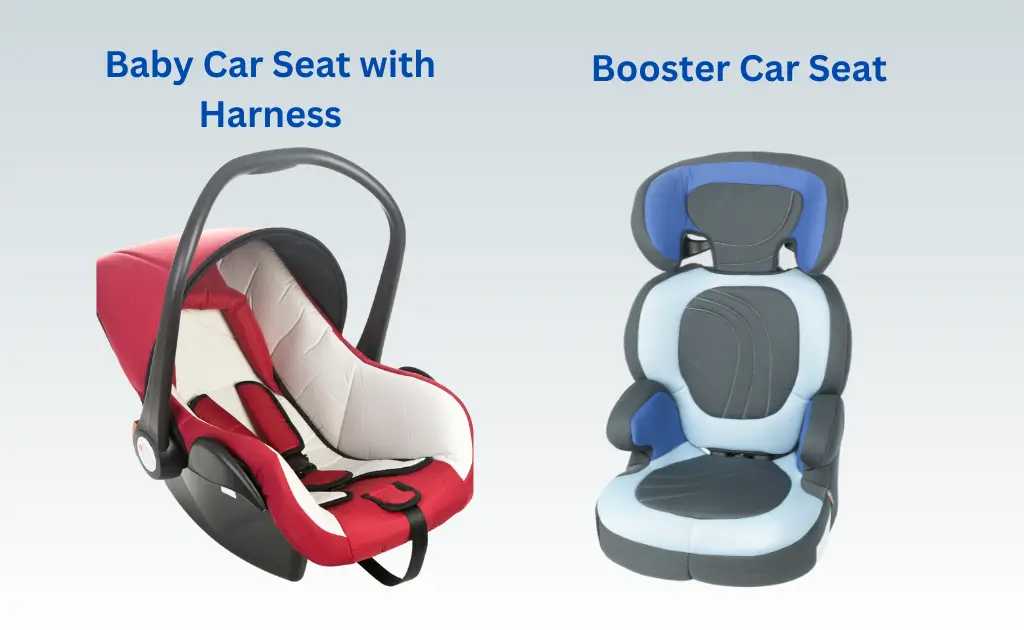
How Booster Seats Differ from Regular Baby Car Seats
The infant and convertible car seats differ from booster seats in the following manner:
- Infant & Convertible Car Seats: All infant and convertible car seats have a 5-point harness to secure babies and toddlers.
- Booster Seats: Booster seats use the car’s seat belt to secure bigger kids who have outgrown their harnessed seats.
When Should Your Child Switch to a Booster Seat?
Switching from a forward-facing car seat to a booster seat is a big step, but how do you know if your child is ready?
Key Signs Your Child Is Ready for a Booster Seat
A booster seat is best for older kids who have grown above the age, height, and weight limits of their 5-point harness car seat but are not yet big enough for an adult seat belt. This is the time to secure them in a booster car seat. A booster seat raises and positions them so that the lap and seat belts fit them properly. Here’s how to tell if it’s time to switch:
1. They’ve Outgrown Their Car Seat
First, verify your child’s weight and height against the restrictions on the forward-facing car seat. If he exceeds the recommended limits, then he is ready to switch. Most harnessed seats are designed for children weighing between 40 and 65 pounds. If your child weighs more than that, it’s time to switch to a booster seat
2. They Can Sit Still in the car
A 5-point harness car seat secures a child by supporting him at five points ( two shoulders, two hips, and between the legs). On the other hand, booster seats rely on your child to stay in the correct position for a safer ride. If your kid is wiggly, slouching, or trying to move the seat belt, they might not be ready yet.
3. The Seat Belt Fits Properly in a Booster
A properly fitting seat belt should:
- Rest flat across the upper thighs, not the stomach.
- Sit across the shoulder and chest, not the neck.
- Stay in place even when your child moves.
Age, Height & Weight Guidelines for Booster Seats
Most kids move to a booster seat between 4 and 7 years old, but height and weight matter more than age. General guidelines include:
- Weight and Height: The child should weigh at least 40 pounds and be at least 40 inches tall before transitioning.
- Ages 5-7: Ideal time for high-back boosters.
- Ages 8-12: Typically using backless boosters until they reach 4’9″.
Each state has different booster seat laws, so it’s always best to check local regulations before switching.
Common Myths About Switching to a Booster Seat
Myth#1: “If my child is 4, they’re ready for a booster.”
- Not always! It’s about size, not just age. Many 4-year-olds still need a harnessed car seat.
Myth#2: “A seat belt alone is fine after age 6.”
- Nope! They still need a booster unless they’re 4’9″ and pass the 5-step seat belt test.
Myth#3: “Backless boosters are unsafe.”
No, that’s not true. Backless boosters are just as safe as high-back boosters if the car seat has a headrest and the seat belt fits the child correctly.
Types of Booster Seats & How to Choose the Best One
There are three types of booster car seats based on their structure and usage.
1. High-Back Booster Seats – Best for younger kids and vehicles without headrests.
2. Backless Booster Seats – Ideal for older kids and travel.
3. Convertible Booster Seats – Long-term use may not always be the most practical option.
Each has its pros and cons. Choosing the right type depends on many factors, like your child’s age, weight, height, and vehicle compatibility.
🚗 High-Back Booster Seats: Extra Support & Safety
A high-back booster seat has a backrest and often includes side wings for head and neck support.
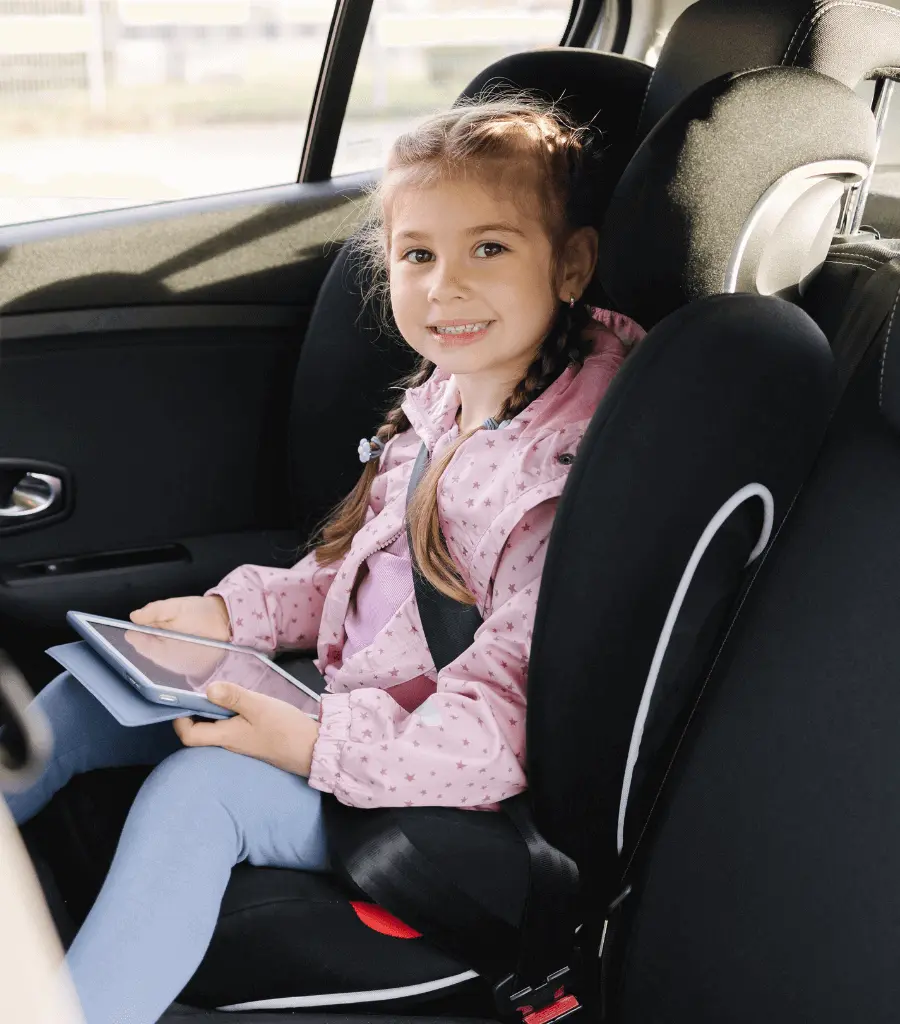
✔ Best for:
✅ Younger children transitioning from a car seat (around 4–7 years old).
✅Cars without built-in headrests or with low seat backs.
✅Children who frequently nod off in the car (provides better support).
👍 Pros and 👎 Cons
✅ The Pros
- ✔ Better side-impact protection – Extra padding in high-back booster seats absorbs impact forces, providing extra safety.
- ✔ Keeps kids in the correct position – By keeping children in the proper position, a high-back booster seat helps prevent them from slouching or leaning.
- ✔ Head and neck support – Extra Head and neck support makes a booster seat an excellent choice for naps and long rides.
❌ The Cons
- ❌ Bulkier & heavier –A high-back booster seat is heavy and not the best option for frequent car swaps because it has a backrest and side wings for additional support.
- ❌ More expensive – A high-back booster car usually costs more than a backless booster.
💡 Pro Tip: A high-back booster seat is an excellent choice if your child still naps in the car or tends to move around while sitting.
💺 Backless Booster Seats: Lightweight & Travel-Friendly
A backless booster seat raises your child so the seat belt fits correctly. It does not have a backrest or side wings, so it depends on the car’s seat for head and neck support. Some models include a LATCH attachment and a quick-release feature.
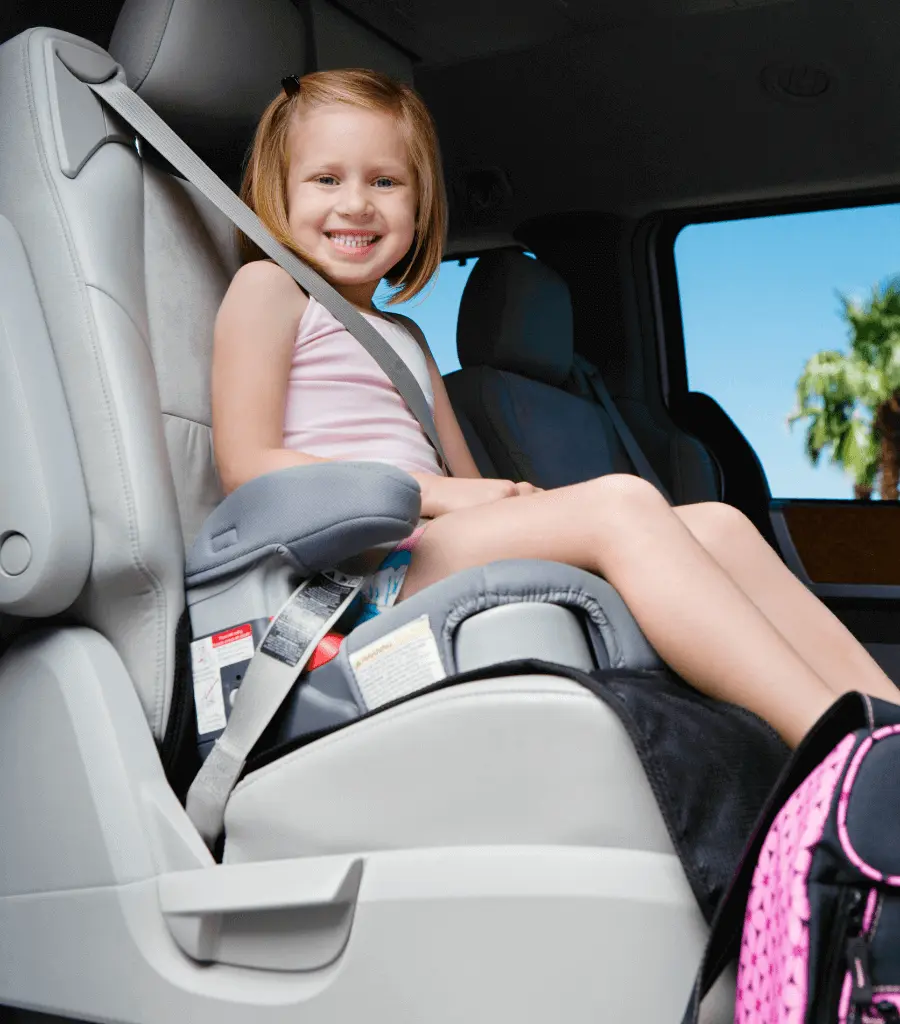
✔ Best for:
✅ Backless booster seats are best for older kids (6+ years old) who can sit appropriately without extra support.
✅ These seats are best for cars with built-in headrests and high seat backs, as backless booster seats fit more efficiently without taking up more space.
✅Families who travel and carpool frequently prefer a backless booster seat as they are lightweight.
👍 Pros and 👎 Cons
✅ The Pros
- ✔ Easier to move between vehicles – These booster seats are easy to move from one vehicle to another as they are lightweight and compact.
- ✔ Less expensive – These seats are without head and back support, so they are less costly than high-back boosters.
- ✔ Better for bigger kids – Helps them transition to using a regular seat belt.
❌ The Cons
- ❌ No side-impact protection – Doesn’t protect the head or neck in crashes.
- ❌ Kids may slouch – No upper body support, so kids must sit adequately.
- 💡 Pro Tip: If you choose a backless booster, ensure the car’s headrest supports your child’s head—otherwise, a high-back booster is safer.
🔄 Convertible Booster Seats: Worth It or Not?
A convertible or 2-in-1 booster seat starts as a high-back booster and later converts into a backless booster. These belt-positioning booster seats fit your child from 40 – 120 lbs and can be used either high-back or backless. It is the most versatile option for growing kids.
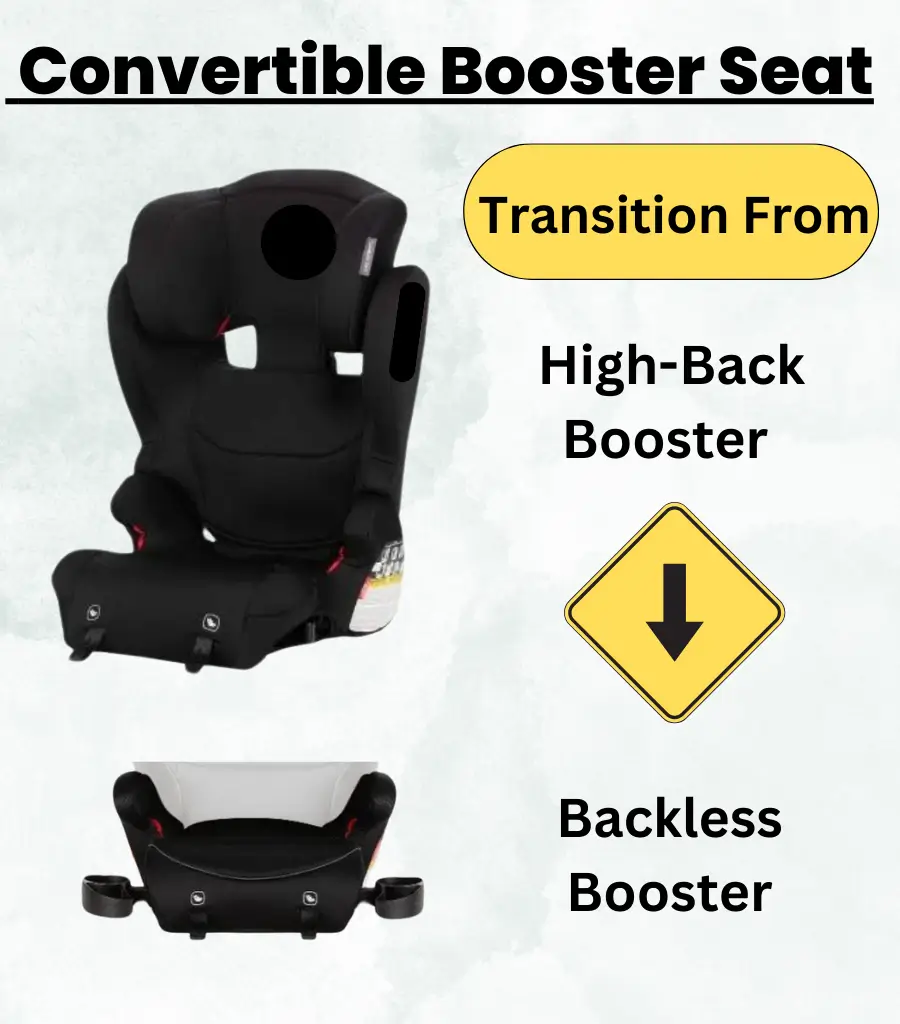
✔ Best for:
✅ Parents who want a long-term option (grows with your child).
✅ Families who don’t want to buy multiple booster seats over the years.
👍 Pros and 👎 Cons
✅ The Pros
- ✔ Saves money in the long run – Convertible booster seats are economical as they can be converted from high-back to backless booster. They last for years, saving you money in the long run.
- ✔ More adaptable – These seats work in different types of cars, from smaller to larger, encompassing various body styles. That is why they are more flexible.
❌ The Cons
- ❌ Takes up more space – Some models are larger than needed, and it is difficult to fit them in small cars.
- ❌ Not always the best for comfort – Some kids find them less cozy than a regular high-back or backless booster.
🔍 High-Back vs. Backless Booster: A Quick Comparison
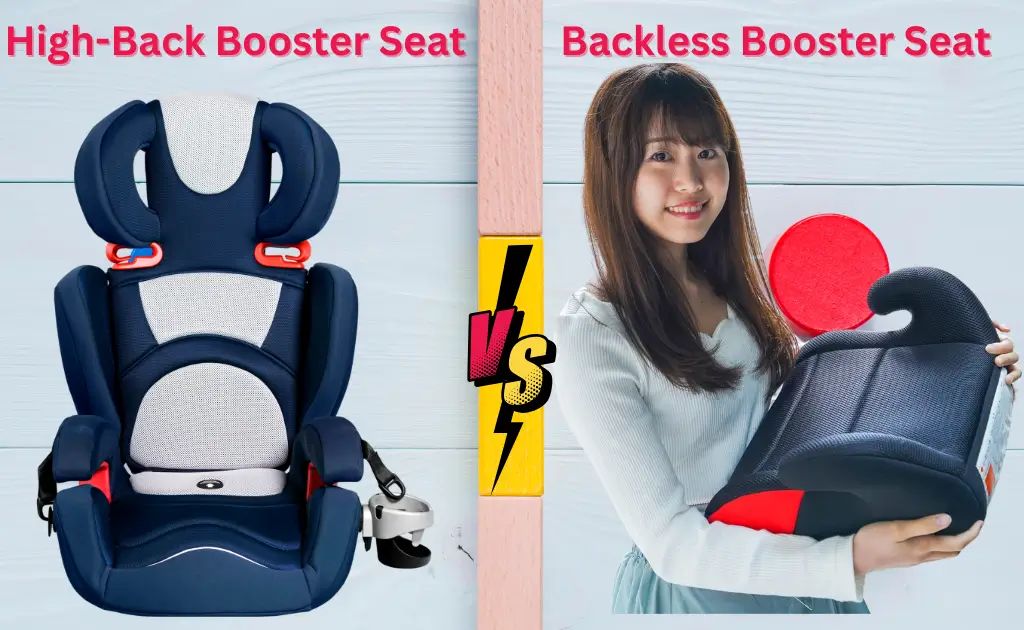
The following table provides a quick comparison between a high-back and a backless booster seat.
| Feature | High-Back Booster | Backless Booster |
|---|---|---|
| Best for | Younger kids (4–7 years old) | Older kids (6+ years old) |
| Side-impact protection | ✅ Yes | ❌ No (needs car headrest) |
| Head & neck support | ✅ Yes | ❌ Less support |
| Ease of transport | ❌ Bulky | ✅ Lightweight |
| Best for long trips | ✅ More comfortable | ❌ Less support |
| Cost | 💲💲💲 More expensive | 💲 Budget-friendly |
💡 Final Verdict:
✔ If your child is younger or falls asleep in the car, go for a high-back booster.
✔ If they’re older, responsible, and your car has proper headrests, a backless booster works fine.
How to Install A Booster Seat
Once you have selected the perfect booster car seat, it is time to install it correctly. A booster seat doesn’t use built-in harnesses like a car seat and relies on your vehicle’s seat belt to do the job. That means proper positioning is everything.
Step-by-Step Guide
1️⃣ Choose the right seat for your child – Make sure it fits their age, height, and weight.
2️⃣ Position the seat in the back – The safest place for a booster seat is in the rear seat, preferably in the middle.
3️⃣ Ensure a snug fit – If using a high-back booster, align it against the car seatback. Backless boosters should sit flat on the car seat.
4️⃣ Check the seat belt placement – The lap belt should be low, and snug across the hips, and the shoulder belt should rest on the chest and shoulder (not the neck!).
5️⃣ Do a final safety check – Have your child buckle up in the seat. Ensure there’s no excessive movement.
Booster seat installation guide
Credit: NHTSA (National Highway Traffic Safety Administration)
Common Installation Mistakes (And How to Fix Them!)
Even the best booster seats won’t protect your child if installed improperly. Here are some mistakes parents often make:
- Using only the lap belt – For full protection, always use a booster seat with both a lap belt and a shoulder belt.
- Loose seat belt – A seat belt that isn’t snug can be dangerous in a crash.
- Placing the booster seat in the front seat – The safest spot is always in the back!
- Mispositioned shoulder belt – It should never touch the child’s neck or slip off their shoulder.
How to Make Sure the Booster Seat Fits in Your Car
Vehicles differ in design and space; not every booster seat fits every car perfectly. Here are some tips to guarantee a good match:
- Check your car’s seat shape – Some vehicles have too contoured seats, making booster seats unstable. Backless boosters are a better choice in this case.
- Measure available space – Small cars may have less space, and compact booster seats are a good fit.
- Test the seat before buying – Try installing the booster seat in your vehicle before purchasing.
Seat Belt Positioning: The Key to Maximum Safety
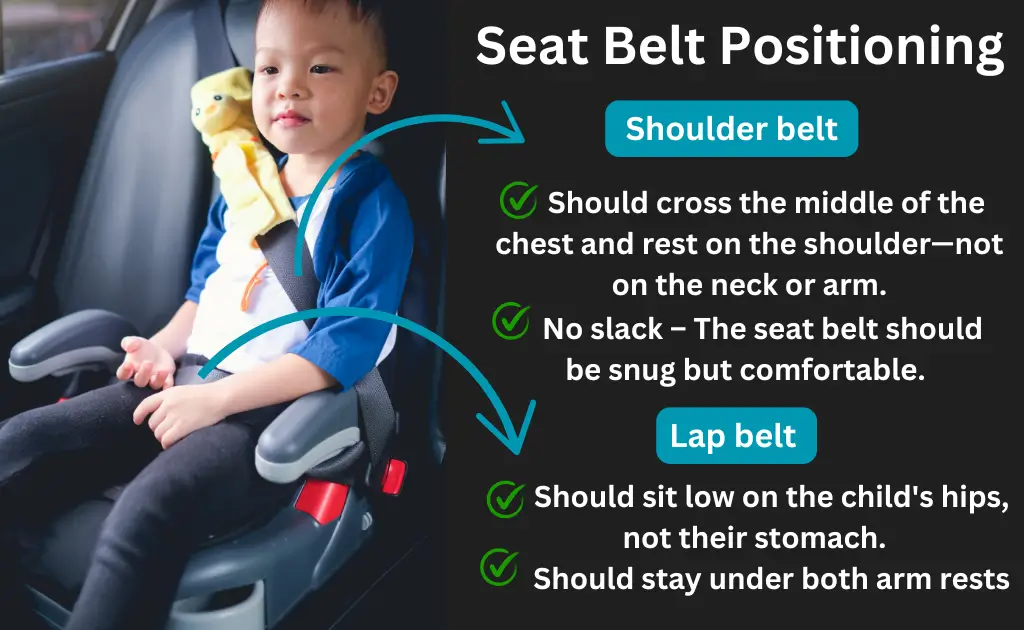
A booster seat’s job is to raise your child so that the seat belt fits them correctly. A poorly installed booster seat significantly compromises a child’s safety, potentially leading to severe injuries in a crash, especially if the seat belt is not positioned correctly. But how do you know if it’s right?
1. Lap belt – should sit low on the child’s hips, not their stomach.
2. Shoulder belt – Should cross the middle of the chest and rest on the shoulder—not on the neck or arm.
3. No slack – The seat belt should be snug but comfortable.
4. Lap belt –Should stay under both armrests.
If the seat belt isn’t positioned correctly, it can cause serious injuries in a crash. Take a moment to double-check before every ride!
Safety Ratings & Crash Test Results: What to Look For?
Not all booster seats are created equal. Some perform better than others in crash tests.
Here’s what to look for when checking safety ratings:
- Seek NHTSA clearance: To ensure car seat safety, all seats sold in the US must meet the Federal Motor Vehicle Safety Standard (FMVSS) 213, which mandates performance standards and requires specific labels, including “certified to FMVSS 213. Find out if your seat satisfies federal safety standards.
- High crash-test scores: Every booster must comply with a Federal crash-test safety standard. Verify ratings from reliable sources, such as the Insurance Institute for Highway Safety (IIHS).
- Protection against side impacts: High-back boosters offer additional defense against side impacts.
- Usability: A seat that is challenging to install is more likely to be misused.
Why Booster Seat Laws Exist (And Why You Should Follow Them!)
Each country and state sets laws for child safety. It is necessary to follow these laws to significantly reduce the risk of serious injury or death for children in car crashes. Ignoring these laws can result in fines, legal trouble, and, most importantly, putting your child at risk.
State-by-State Booster Seat Laws in the USA
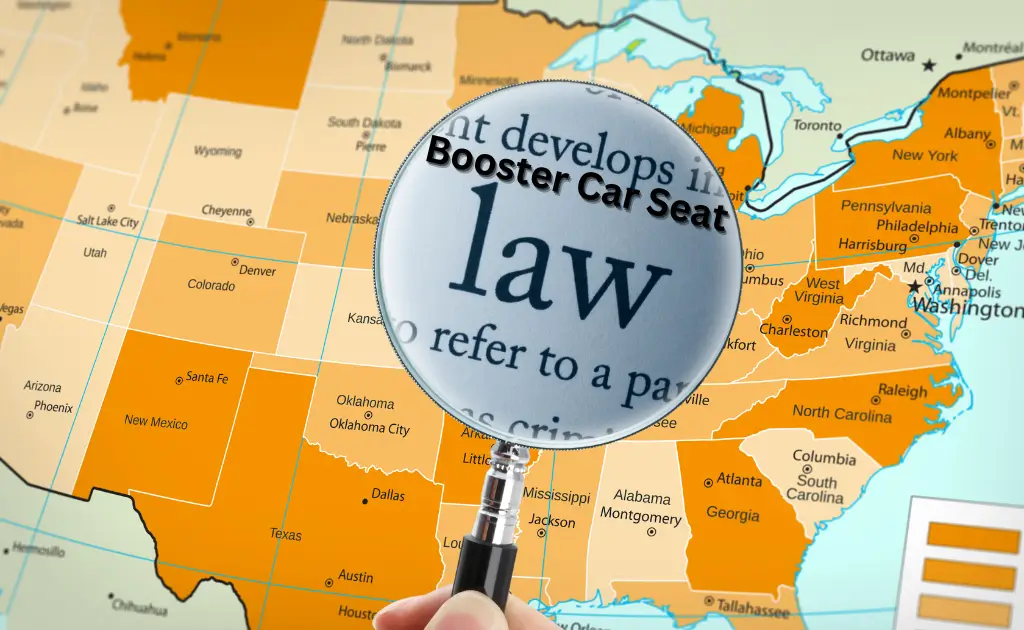
Each US state has rules about when a child must use a booster seat and when to switch to a regular seat belt.
Here are some key examples:
- California, New York, Texas, and Utah – Require booster seats until at least age 8 or a height of 4’9″.
- Illinois & Pennsylvania – Booster seats are required until age 8.
- South Dakota & Florida – Allow kids as young as 4-5 to switch to a booster seat.
- Washington & Colorado – Some of the strictest laws require boosters until age 12 if the child isn’t tall enough (57 inches) for a seat belt to fit correctly.
Booster Seat Laws Around the World
If traveling abroad, be aware that booster seat laws vary widely. Here are a few key differences:
- United Kingdom – Children must use a booster seat until age 12 or 135 cm (4’5″) tall.
- Canada – Laws vary by province, but most require boosters until age 9 or 145 cm (4’9″ ) in height.
- Australia – Kids must be in a booster seat until age 7, sometimes longer, depending on size.
- European Union – Many countries require booster seats until age 10–12, or 150 cm height, whichever comes first.
What Happens If You Don’t Follow Booster Seat Laws?
Booster seat laws are set to ensure that parents and caregivers provide the safety of their children, and non-compliance can result in serious consequences, including:
Fines & Penalties – You can be fined $50 to $500 due to non-compliance with the laws.
Higher Insurance Costs –Since your insurance cannot pay for medical expenses if you are in an accident, and your child is not secured in a booster seat.
Increased Injury Risk – Without a booster seat, your child is much more likely to suffer serious injuries or may lose their life in an accident.
How to Stay Updated on Booster Seat Law Changes
Laws change frequently, so it’s essential to stay informed. The following are the tips to stay updated.
🔹 Check your state’s DMV or Department of Transportation website.
🔹 Ask your pediatrician for the latest safety laws
🔹Sign up to receive notifications from car seat manufacturers.
To find out the updated booster seat laws in your state, visit 👇
Common Mistakes Parents Make with Booster Seats
Even with the best intentions, parents sometimes make mistakes when switching their child to a booster seat. Here are some of the most common ones:
- Switching Too Soon – Many parents move their kids to a booster before they’re ready. If your child can’t sit still and keep the seat belt properly positioned, they may still need a forward-facing car seat with a harness.
- Not Using a Booster at the Right Height & Weight – Just because your child turns 4 or 5 doesn’t mean they’re ready. They need to meet the height and weight requirements (usually at least 40 pounds and 38 inches tall).
- Not Positioning the Seat Belt Correctly – The seat belt should sit across the chest and lap, not across the neck or stomach. A poorly positioned belt can cause serious injuries in a crash.
- Skipping the Booster Too Soon – Some parents move their child directly to a seat belt before they’re big enough. Kids should stay in a booster until they pass the 5-step seat belt test, ensuring the belt fits properly without extra help.
Frequently Asked Questions
How long do booster seats last before they expire?
Most booster seats expire 6 to 10 years after they are made. You can usually find the expiration date on a label or printed on the seat. It’s best not to use a booster seat past its expiration date, as the materials may wear out and no longer protect your child as well.
When can my child stop using a booster seat?
Children should remain in booster seats until they are between 8 and 12 years old and at least 4 feet 9 inches tall. At this height and age, the seat belt in the car will fit them correctly, reducing the risk of injury in an accident.
Are backless booster seats safe?
Backless booster seats are safe when used correctly and in appropriate situations. They work well for older kids who can sit up straight without assistance and who are using a car seat with a headrest. But for smaller kids or cars with inadequate head support, high-back booster seats are a better option since they offer more support and side-impact safety.
What’s the best booster seat for a 5-year-old?
For most 5-year-olds, the best booster seat is usually a high-back booster with strong side-impact protection, adjustable head support, and an easy-to-fit seat belt path. High-back boosters help position the vehicle seat belt correctly and provide better comfort and support for younger kids, especially on long rides.
What’s the difference between a high-back and a backless booster seat?
A high-back booster seat has a backrest and side wings to support your child’s head and neck, plus guides to help position the seat belt correctly. This style works well in cars without headrests or with low seatbacks. It is a good option for younger children, as it helps keep them safe and in the right position.
In contrast, a backless booster seat is a simple cushion that raises the child to ensure the seat belt fits properly. Backless boosters are best for cars with high-back seats and built-in headrests. These are more portable and are preferred by families who frequently travel and carpool. These seats are suitable for older children as they lack the additional support and side-impact protection that high-back boosters offer.
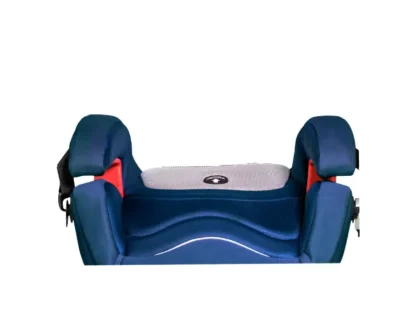
Final Words
A booster car seat serves as a bridge between a child’s harnessed seat and the seat belt stage. It enables the adult seat belt to fit the child more securely and comfortably. Once children outgrow car seats, booster seats are necessary to protect them in a crash. A perfect booster must fit your child’s weight, height, and age, and be compatible with your car.
A high-back booster is the best option for extra support, a backless booster for convenience, and a convertible booster for extended usage. It is essential to properly install booster seats and adjust seat belts to keep your child safe while riding. Stay informed and up to date on state laws to avoid any inconvenience.