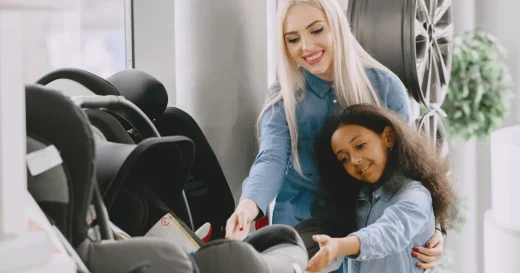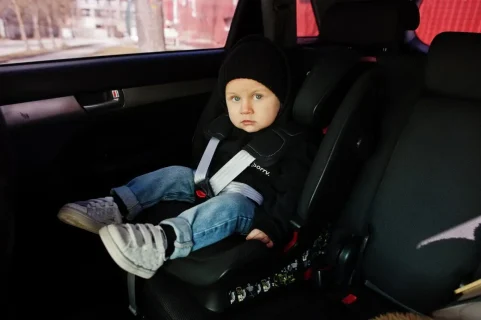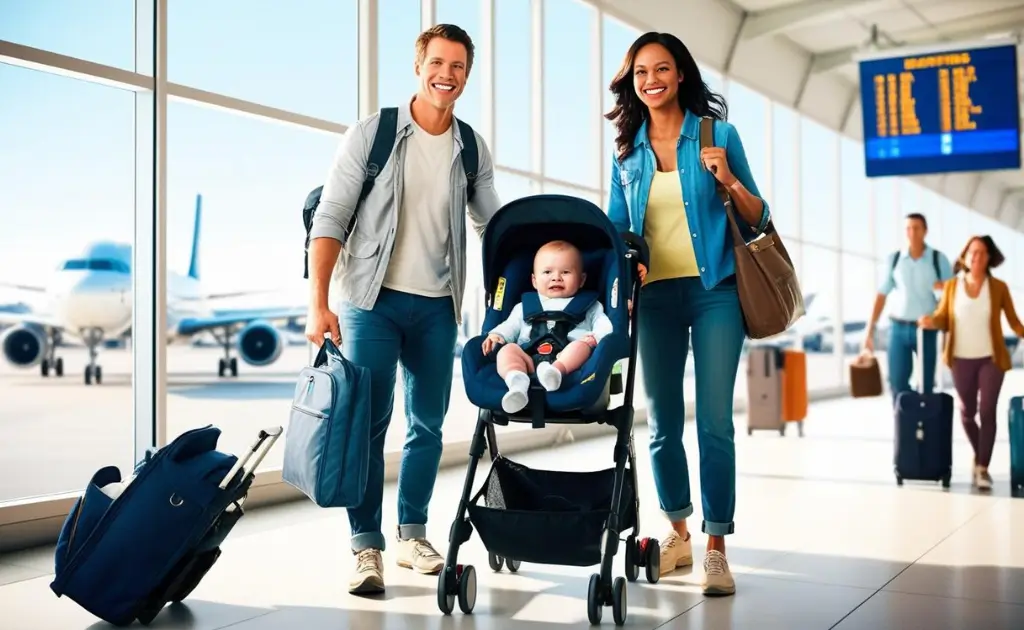
If you think flying with a baby car seat is troublesome or complicated, think again! Many parents assume that holding their baby in their arms is the best and easiest way to travel, but in reality, using a baby car seat on a flight is the safest option. Not only does it protect your little one during unexpected turbulence, but it also guarantees a seamless and more comfortable journey for both you and your baby.
Are you allowed to bring a car seat on a plane? Yes, you can! But there are rules, airline policies, and practical tips that make the process easier. In this guide, we will break it down into 7 simple steps so you can fly stress-free.
Are Baby Car Seats Allowed on Airplanes?
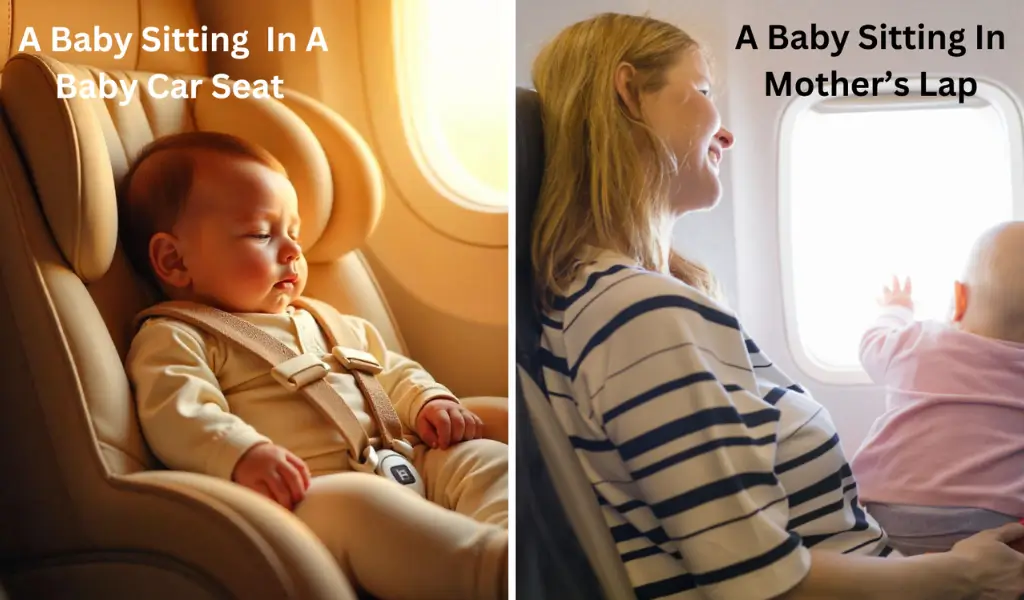
The Federal Aviation Administration (FAA) strongly suggests that babies and toddlers under 40 lbs travel in an FAA-approved car seat. Why? Because lap babies—infants under two who fly for free while sitting on a parent’s lap—are at risk of serious injury during turbulence. A properly installed car seat provides the safest possible protection.
To be allowed on board, the car seat must have a label stating, “This restraint is certified for use in motor vehicles and aircraft.” If your car seat has this label, you’re good to go! Remember that airplane seats only have lap belts—LATCH systems are unavailable on planes, so you’ll have to install the car seat using the seatbelt.
Airline Rules You Should Know
While the FAA sets the general rules, each airline may have its own policies regarding car seat placement. Here are some standard airline regulations:
Window seat placement – Most airlines require car seats installed in a window seat so they don’t block other passengers from exiting.
No car seats in exit rows – It’s a strict safety rule that you cannot install a car seat in an exit row.
Size restrictions – Some airlines may have specific seat width limits, so it’s always a good idea to check your car seat’s dimensions against the airline’s seating chart.
Child Restraint Systems (CRS)—Some Airlines Offer a CARES Harness (FAA-approved for children 22-44 lbs) as an alternative to a car seat.
International airline policies – Not all airlines outside the U.S. follow FAA guidelines, so if you’re flying internationally, check with your airline beforehand to confirm their rules on using car seats.
Here’s a quick overview of major airlines and their car seat policies:
- American Airlines – Allows FAA-approved car seats, but not in exit rows.
- Delta – Car seats must be in a window seat unless the row has no other passengers.
- United Airlines – Permits car seats but prefers rear-facing ones to be in the back rows.
- Southwest Airlines – Recommends buying an extra seat for a car seat, but allows free checking.
JetBlue – Allows car seats but advises checking the seat width before booking.
💡 Pro Tip: Call your airline before your flight to double-check their policies and avoid any last-minute surprises at the gate!
Can You Use a Rear-Facing Convertible Car Seat on a Plane?
Yes! But it’s tricky.
🔹 Rear-facing car seats take up more space, and if the person in front of you wants to recline, it could be a tight squeeze.
🔹 Some airlines require rear-facing seats in specific rows (usually the back of the cabin).
🔹 Not all flight attendants are familiar with FAA rules, so if questioned, be prepared to explain that rear-facing car seats are allowed.
Best Baby Car Seats for Air Travel
Not all car seats are great for air travel. Some are too bulky, while others might not even be FAA-approved. Choosing the right car seat is crucial if you want a hassle-free flight with your little one.
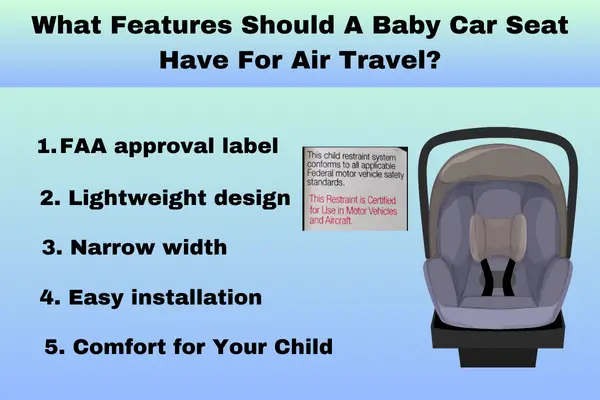
What Features Should A Baby Car Seat Have For Air Travel?
Here are the key features to consider when picking a baby car seat for flying:
1. FAA approval label
The seat must be certified for air travel. Look for a sticker that says, This restraint is certified for use in motor vehicles and aircraft.
2. Lightweight design
Carrying a heavy car seat through an airport is a nightmare! Ideally, pick one that weighs under 15 lbs.
3. Narrow width
Standard airplane seats are 16-18 inches wide. A bulky car seat won’t fit properly.
4. Easy installation
Simple belt path designs make securing the seat quick and stress-free.
5. Comfort for Your Child
Long flights mean your child will be in the seat for hours. Choose one with good padding and head support.
💡 Pro Tip: Avoid all-in-one car seats for air travel—they’re too big and heavy for most airplane seats.
If you fly often, invest in a lightweight, foldable car seat that’s easy to carry.
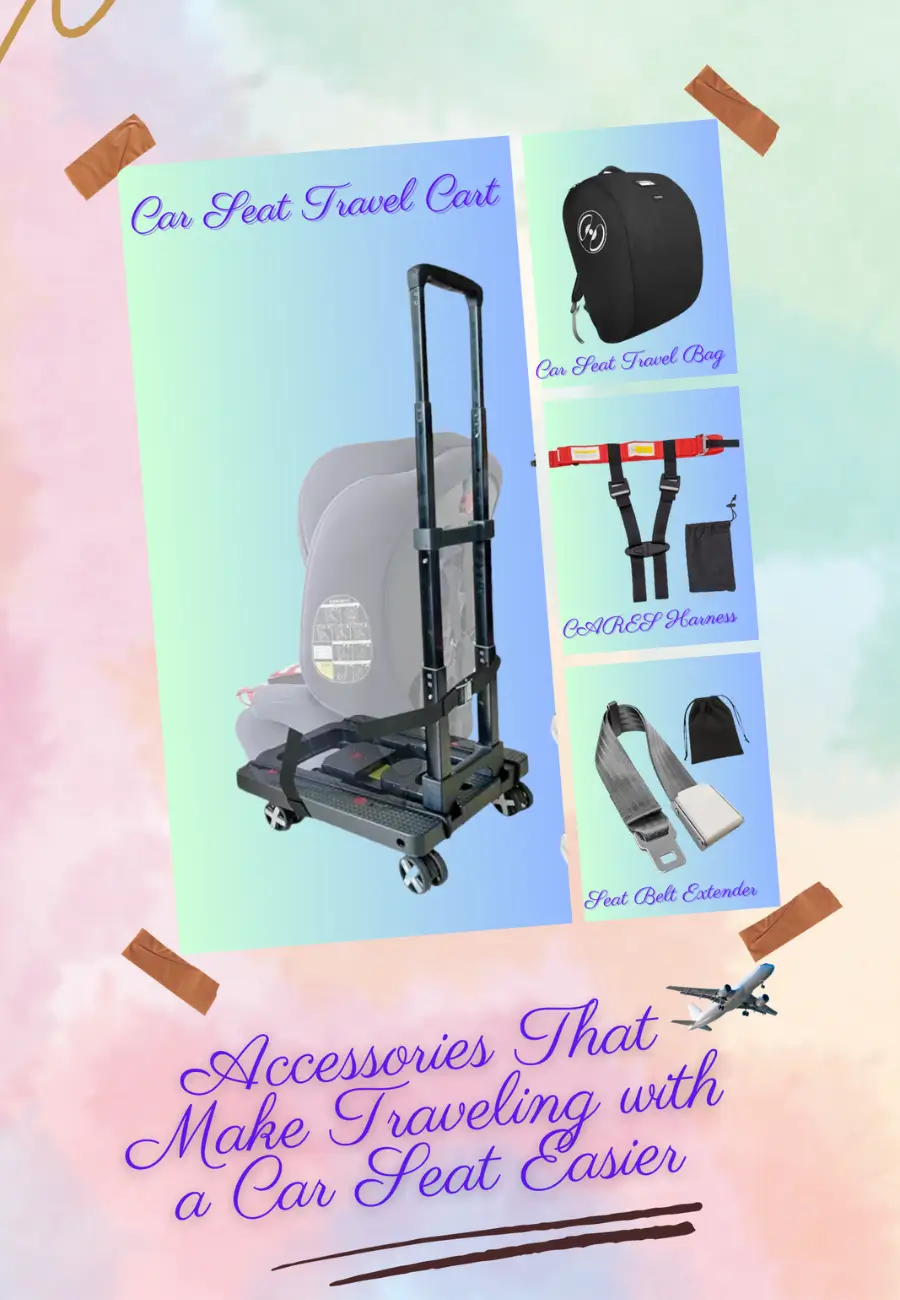
Accessories That Make Traveling with a Car Seat Easier
Bringing a convertible car seat on a plane is easier with the right travel accessories. Here are some must-haves:
- Car Seat Travel Bag – Protects your seat from dirt and damage when checked at the gate.
- Car Seat Travel Cart – Turns your car seat into a stroller so you can wheel it through the airport.
- CARES Harness – If you don’t want to bring a car seat, this FAA-approved harness is a lightweight alternative for kids 22-44 lbs.
- Seat Belt Extender – Helps if the airplane seatbelt buckle is in an awkward position under the car seat.
- 💡 Pro Tip: If you’re traveling alone with a toddler, a car seat travel cart is a game-changer—it saves your arms from carrying a heavy seat!
How to Breeze Through Airport Security with a Car Seat
Transportation Security Administration(TSA ) is an American governmental agency that is responsible for travel safety, especially air travel. TSA security is one of the biggest challenges when traveling with a car seat on an airplane. Here’s how to address this challenge successfully:
- Use a Car Seat Travel Cart or Backpack
- Instead of carrying your seat by hand, strap it onto a travel cart or put it in a car seat backpack to move easily through the airport.
- Know the TSA Rules
- Car seats must go through the X-ray machine. If it’s too big, TSA will do a manual check, which can take extra time—so arrive early!
- Gate-Check as a Last Resort
- If you don’t plan to use the car seat on the Plane, you can check it at the gate (for free!). But use a car seat travel bag to prevent dirt and damage.
💡 Pro Tip: If traveling solo with a toddler, ask for family security lanes—usually shorter and less stressful!
What If My Car Seat Is Too Big for an Airplane Seat?
So you arrive at the airport, and your baby‘s car seat doesn’t fit in the airplane seat. What now?
Your Options:
1️⃣ Try a Different Seat – If the Plane isn’t complete, ask the flight attendants if you can switch to a seat with more space.
2️⃣ Gate-Check the Car Seat – If it doesn’t fit, the airline will check it for free, and you can pick it up at your destination.
3️⃣ Use an FAA-Approved Harness Instead—The CARES Harness is a lightweight alternative if a car seat isn’t an option.
🚨Pro Tip: Before you fly, check the dimensions of your car seat and compare them with the airline’s seat width.
Gate Checking vs. Carrying a Car Seat Onboard: What’s Better?
One of the parents’ most significant questions when flying with a baby car seat is whether to gate-check it or bring it on board. Let us find the answer!
- ✔️ Use the car seat on the Plane → This is the safest option. It keeps your baby secure in turbulence and ensures they have a familiar, comfortable space to sit.
- ✔️ Gate-check the car seat → Most airlines let you check a car seat for free at the gate. This saves space in the cabin but comes with a risk of damage.
- ❌ Avoid checking it as luggage → Baggage handlers are not gentle. Car seats can be thrown around, lost, or even arrive broken.
💡 Pro Tip: If you’re not using the car seat on board, gate-checking is safer than counter-checking it with your luggage.
Gate Checking Vs. Carrying A Car Seat Onboard – Pros & Cons
Compare the pros and cons to make the best choice for your travel needs. Each option has pros and cons.
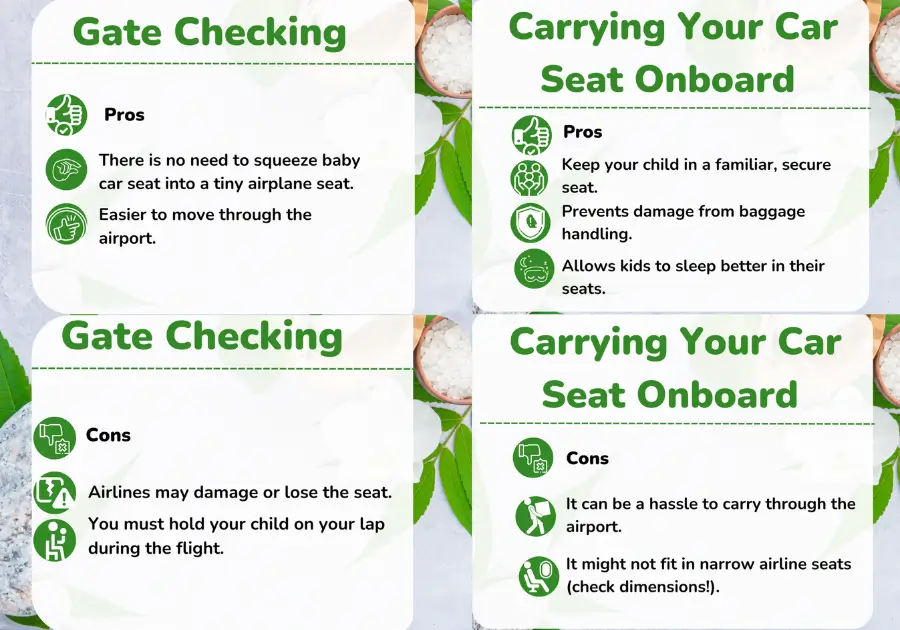
✈️ Carrying Your Car Seat Onboard (Best for Safety!)
Best for: Young children who need a safe seat during the flight.
Pros:
- Keep your child in a familiar, secure seat.
- Prevents damage from baggage handling.
- Allows kids to sleep better in their seats.
Cons:
- It can be a hassle to carry through the airport.
- It might not fit in narrow airline seats (check dimensions!).
💡 Pro Tip: To make transport through the airport easier, use a car seat, travel cart, or backpack-style carrier.
🎒 Gate-Checking a Car Seat (Easier to Carry, But Riskier)
Best for: Parents who don’t want to carry a car seat through the Plane.
Pros:
- There is no need to squeeze it into a tiny airplane seat.
- Easier to move through the airport.
Cons:
- Airlines may damage or lose the seat.
- You must hold your child on your lap during the flight.
💡 Pro Tip: If you must gate-check, put the car seat in a padded travel bag to reduce damage.
How to Protect a Car Seat When Checking It
If you decide to check your car seat, take these steps to keep it safe:
- Use a car seat travel bag – This protects against dirt, moisture, and rough handling.
- Label it as FRAGILE – Add large “FRAGILE” stickers so handlers treat it carefully.
- Inspect it upon arrival – Always check for cracks, broken parts, or loose harness straps when you pick it up.
💡 Pro Tip: If your car seat is damaged during the flight, report it to the airline before leaving the airport. Some airlines will reimburse you!
Both options—bringing the car seat on board or gate-checking—work depending on your travel style. But if safety is your top priority, using it on the Plane is the best choice! 🚗✈️
How to Install a Baby Car Seat on an Airplane (Step-by-Step Guide)
Although installing a baby car seat on an airplane may seem tricky, it’s pretty simple. Following the guidelines will help you ensure a safe and secure setup.
Rear-Facing vs. Forward-Facing Seats
👶 Infants (Under 2 years old) →Rear-facing seats are safer than forward-facing seats for infants (those under two years old). It gives your baby’s head, neck, and spine better support.
👦 Toddlers (2+ years old) → Forward-facing may be more practical, but rear-facing is still recommended for as long as possible.
Step-by-Step Installation Guide
Step 1: Place the car seat in a window seat (most airlines require this for safety).
Step 2: Thread the airplane seatbelt through the correct belt path on the car seat.
Step 3: Buckle the seatbelt and tighten it to remove any slack.
Step 4: Check that the seat does not move more than 1 inch in any direction.
Step 5: Secure your baby in the harness with snug straps.
💡 Pro Tip: Some airplane seatbelts are short—ask a flight attendant for a seatbelt extender if needed!
Rear-facing child seat Installation in an airplane guided by the FAA
Forward-facing child seat Installation in an airplane guided by the FAA
Essential Tips for Stress-Free Flying with a Baby Car Seat
Although it may seem stressful to fly with a baby, a little planning helps. Here are some essential tips to ensure a stress-free and seamless journey
✈️ 1. Arrive Early → Give yourself extra time for security checks and boarding. Airports can be unpredictable!
🛫 2. Use a Car Seat Travel Cart → Rolling your car seat through the airport is much easier than carrying it.
💺 3. Book a Window Seat → Most airlines require car seats placed in window seats for safety reasons.
🍼 4. Bring Snacks & Toys → Keep your baby entertained to prevent mid-flight meltdowns.
🧳 5. Pack a Lightweight Travel Stroller → A compact stroller makes airport navigation much more manageable.
😴 6. Dress Your Baby Comfortably → Layered clothing is ideal for temperature changes on the Plane.
💡 Pro Tip: Practice installing the car seat at home before your flight so you’re comfortable setting it up on the Plane.
With these simple tips, flying with your baby and car seat will be a breeze! Planning helps ensure a smooth, comfortable trip for you and your little one. 🚀👶
Should You Rent a Car Seat at Your Destination Instead?
If lugging a car seat through the airport sounds too much of a hassle, you might consider renting one. But is it a good idea?
🤔 Pros of Renting a Car Seat:
- No need to carry a heavy seat through the airport.
- Rental companies provide a car seat with your car rental.
🚨 Cons of Renting a Car Seat:
- You don’t know the seat’s history (it could have been in an accident).
- Some rental seats are old, dirty, or missing parts.
You can’t use a rental car seat on the Plane, so your child won’t have a safety seat during the flight.
Frequently Asked Questions
Do I need to buy a separate plane ticket for my baby’s car seat?
Yes. If you want to use a car seat, your baby needs their seat on the Plane.
Can I use a rear-facing car seat on a plane?
Yes! Rear-facing is allowed, but the seat must fit appropriately in the airplane seat.
Do all airlines allow baby car seats in the cabin?
Most do, but some international airlines have different policies. Always check before flying.
Can I use the LATCH system on an airplane?
No. Airplanes only have lap belts, so you must install the car seat using the seatbelt.
What if my car seat doesn’t fit in the airplane seat?
Try adjusting the recline or ask a flight attendant for a seatbelt extender. Having the right information makes traveling with a baby much easier. Always double-check airline policies before your trip!
Final Thoughts
Flying with a baby car seat on a plane doesn’t have to be stressful—proper planning makes all the difference! You can enjoy a smooth experience by choosing an FAA-approved, lightweight seat. Knowing airline policies and practicing installation beforehand will save you from inconvenience. Whether you use the car seat on board or gate-check it, keeping your little one safe and comfortable is the top priority. With the right gear and a few smart travel hacks, you’ll be ready to take off confidently. Safe travels! ✈️