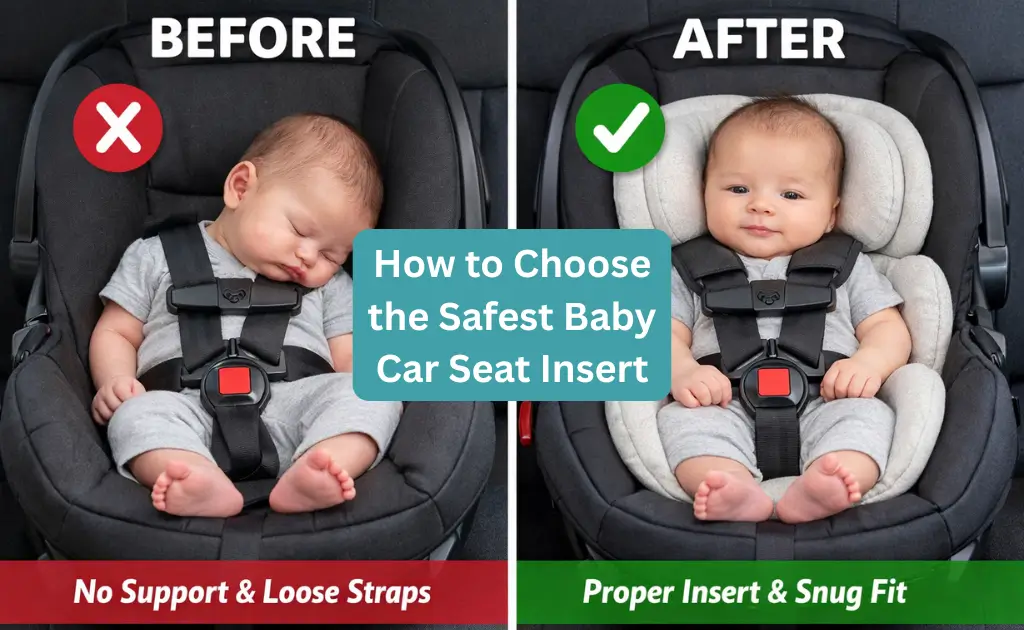
Does your newborn’s head slump to one side when you buckle them in? Many new parents worry about this, and it makes sense to be concerned. The right baby car seat insert can help your little one ride more securely and comfortably. With so many choices like head supports, full-body cushions, and universal inserts, it’s easy to feel unsure about what’s safe. This guide will show you how to pick a baby car seat insert with safety in mind, so you can protect your newborn every time you travel.
Do You Really Need a Baby Car Seat Insert?
If your newborn looks tiny inside their car seat, it’s natural to wonder whether you need a baby car seat insert at all. The answer? It depends on your baby’s size — and more importantly, what your car seat manufacturer allows.
A car seat only keeps your baby safe if they are properly secured. Newborns and preemies often have low muscle tone and little head control. Without the right support, their head might slump forward or to the side, which can affect their airway. A well-designed infant insert can help prevent this.
When You Really Need a Car Seat Insert
You might need a baby car seat insert if any of these apply:
- Your baby weighs less than the minimum recommended for the seat’s best fit.
- You notice your baby moves from side to side in the seat.
- The harness isn’t snug and doesn’t sit at or below your baby’s shoulders.
However, and this is very important, not all inserts are safe.
Manufacturer Inserts vs. Aftermarket Inserts
Most good infant car seats come with a removable newborn insert that’s crash-tested for that seat. These inserts help keep the harness in the right place and support your baby without affecting safety.
Aftermarket or “universal” inserts usually aren’t tested with your car seat model. Extra padding that didn’t come with your seat can change how the harness fits or how crash forces are absorbed.
Safety organizations and child passenger safety technicians (CPSTs) say you should always follow the manufacturer’s instructions when using any baby car seat insert. The National Highway Traffic Safety Administration (NHTSA) recommends using only inserts that come with the car seat or are approved by the manufacturer. Before adding any accessories, check your car seat manual, since unapproved products can affect how the harness works in a crash. Experts from the American Academy of Pediatrics (AAP) also advise against using thick padding behind your baby’s back, as it can interfere with proper positioning and safety. I research baby safety products carefully, and I always tell parents: when in doubt, trust the manual, not marketing claims.
Types of Baby Car Seat Inserts
Not all baby car seat inserts are the same — and understanding the difference can help you make a safer choice.
Before buying anything extra, it’s important to know what type of support your baby actually needs. Some newborns only need light head stabilization, while others need full-body positioning support to achieve a snug, secure fit.
Here’s a simple overview:
1️⃣ Head Support Inserts
These are small cushions that support the sides of your baby’s head and help prevent side-to-side movement.
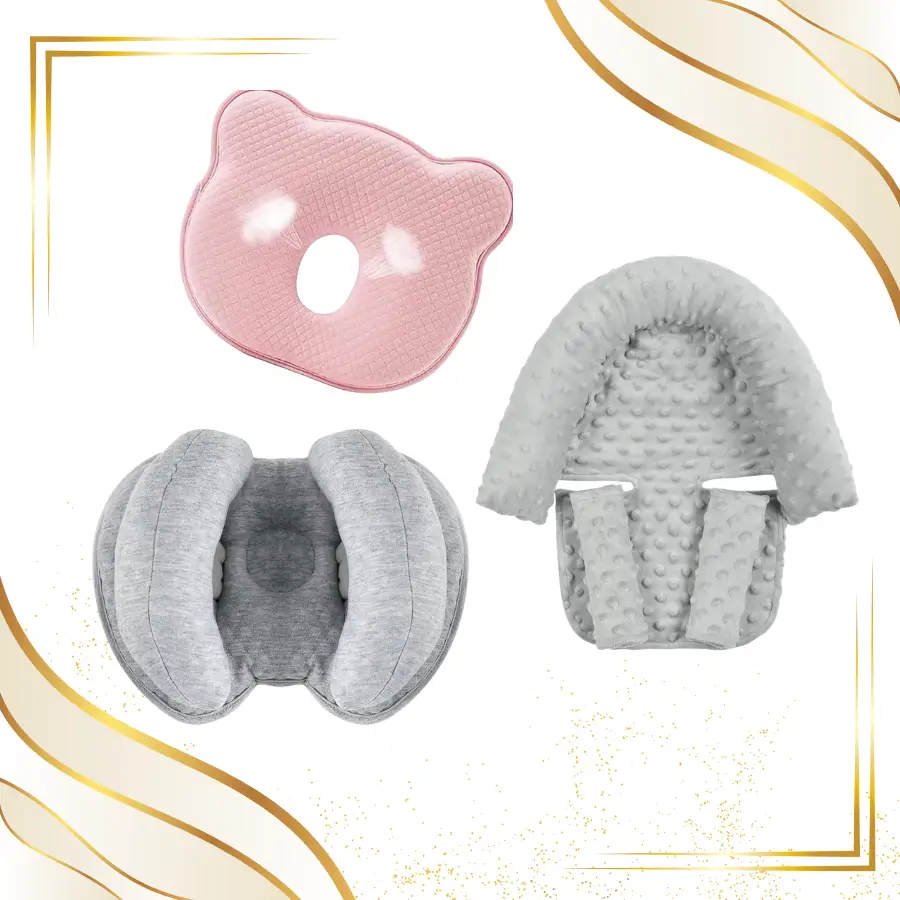
They can help if:
- The harness fits well, but your baby’s head control is still developing.
- Your baby’s head tilts to one side.
Important: Head supports should never push your baby’s head forward or block the harness. Keeping your baby’s airway straight is essential for newborn safety.
Usually, the head support that comes with your car seat is designed to help with proper positioning. Adding extra padding can sometimes be more risky than helpful.
2️⃣ Full-Body Support Inserts
These inserts add padding around the head and sides, and sometimes under the hips, to improve the overall fit.
They are most commonly used for:
- Babies close to the lower weight limit of the seat
- Newborns
- Smaller infants
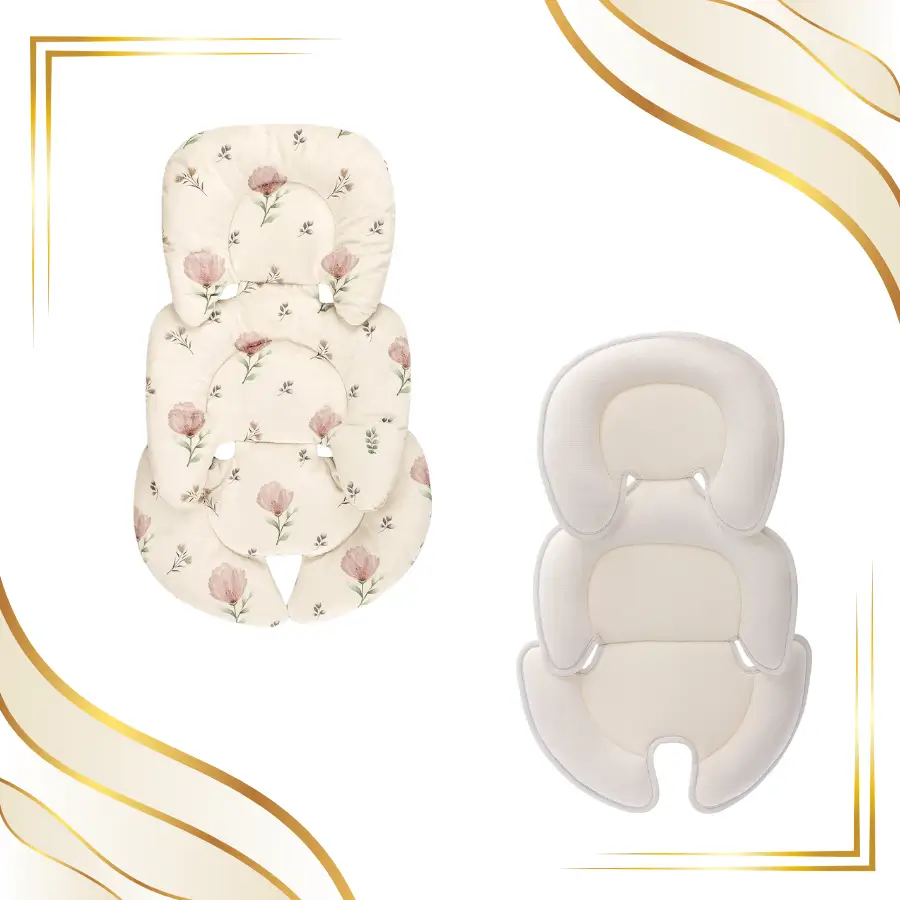
Full-body inserts from the manufacturer are crash-tested with the seat. They help make sure:
- The harness sits at or below shoulder level.
- The baby’s torso remains centered.
- There are no large gaps along the sides.
However, if an aftermarket insert is too thick, it can prevent the harness from tightening properly, making the seat less secure in a crash.
3️⃣ Modular or 2-Piece Inserts
Some car seats include inserts you can adjust as your baby grows.
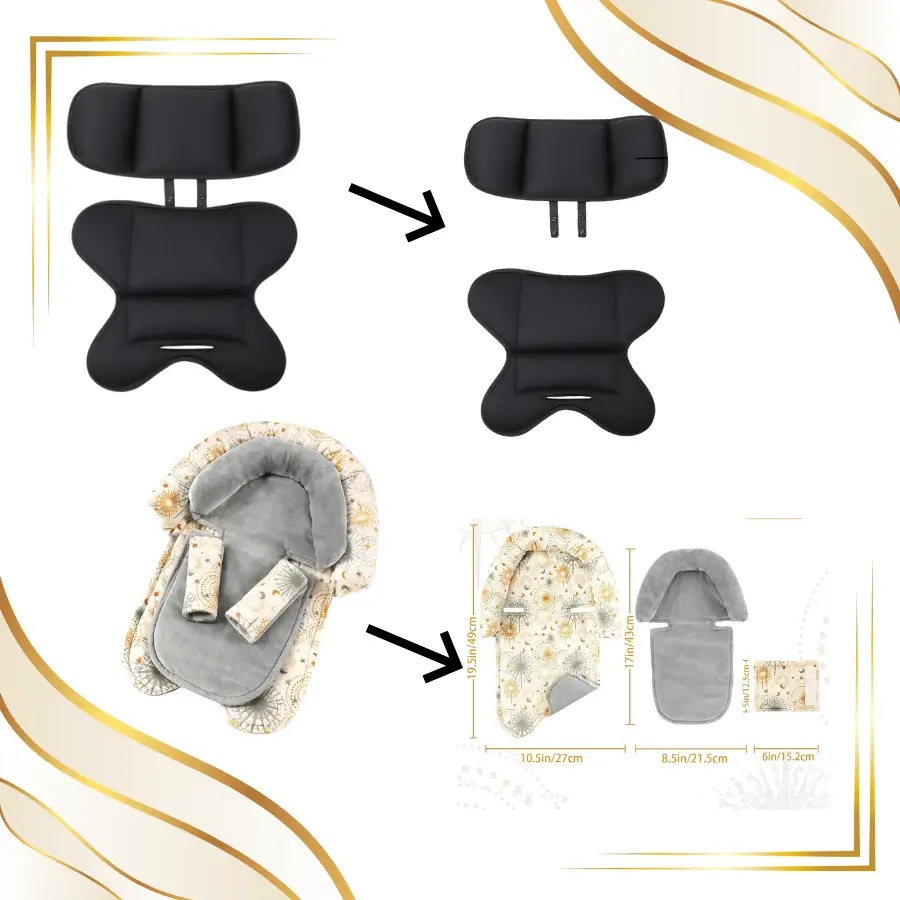
These inserts consist of :
A lower body cushion that can be taken out separately
A removable head pillow
This design lets you:
- Remove certain pieces as your baby grows.
- Maintain proper harness height.
- Extend usability safely
These are often the safest option because they’re made to fit your baby as they grow.
4️⃣ Seasonal Inserts (Breathable vs Plush)
Some baby car seat inserts are designed with the season in mind — light and breathable for summer, soft and plush for winter. It’s a nice idea in theory, but when it comes to car seat safety, comfort can’t come at the expense of proper fit.
If you’re considering an insert, look for one that’s thin and breathable, especially if you live in a warmer climate. Babies can overheat quickly, and bulky fabric can trap heat. The insert should feel supportive and structured — not squishy like a pillow. Very soft, memory-foam–style padding might seem cozy, but it can compress in a crash and affect how the harness holds your baby in place.
Another big factor is compatibility. The insert should clearly state that it’s designed for — or approved for use with — your specific car seat model. If that information isn’t easily accessible, that’s a red flag.
Just as important is knowing what to avoid. Thick padding placed behind your baby’s back can change how snugly the harness fits, even if it doesn’t look obvious at first. Inserts that shift the harness path or lift your baby too high can also interfere with proper shoulder positioning. And if a product doesn’t mention crash testing or manufacturer approval anywhere, it’s best to skip it.
When in doubt, remember this simple rule: your baby needs a secure fit, not extra fluff.
How to Choose the Safest Baby Car Seat Insert
Choosing the right baby car seat insert isn’t just about picking something soft or cute — it’s about making sure your little one rides securely and safely. Here’s a step-by-step guide to help you make the best choice.
1️⃣ Check Manufacturer Approval First
The very first rule: always follow your car seat manufacturer’s instructions. Inserts that didn’t come with your car seat may look harmless, but they can actually change how the harness fits or how crash forces are absorbed.
Most reputable car seats include a newborn or infant insert that has been crash-tested specifically for that model. Using only approved inserts ensures your baby is protected the way the seat was designed.
Tip: If you can’t find the information in your manual, check the manufacturer’s website or contact customer support. Safety always trumps convenience.
2️⃣ Make Sure the Harness Fits Properly
The insert should help your baby sit snugly, but never add extra bulk that changes harness placement.
- The harness straps should be at or just below your baby’s shoulders for rear-facing seats.
- You should be able to tighten the harness so it’s snug without creating gaps.
- The insert shouldn’t push your baby forward or tilt the head unnaturally.
Proper harness fit is the most critical factor for safety, so double-check every time you buckle your baby in.
3️⃣ Look for Firm, Breathable Support
While a soft, plush insert might feel cozy, anything too squishy — like memory foam — can actually compress during a crash, which reduces its protective support. The safest inserts are those that provide firm, steady support for your baby’s head, neck, and body, while remaining thin and breathable so your little one stays comfortable and doesn’t overheat.
Think of it like giving your baby a gentle, secure hug — supportive and snug — rather than letting them sink into a pillow.
4️⃣ Check Age, Weight, and Size Compatibility
Not all inserts are one-size-fits-all. Some are made for preemies or tiny newborns, while others are suitable only for larger infants.
- Look at your car seat’s minimum weight requirements.
- Check the insert’s age and size guidelines.
- Adjust or remove pieces as your baby grows to maintain a proper harness fit.
Remember: once your baby’s shoulders are above the insert padding, it’s time to remove or adjust it.
5️⃣ Avoid Common Safety Pitfalls
Even the best insert can be unsafe if used incorrectly. Avoid:
- Thick padding behind your baby’s back
- Inserts that force the harness out of place
- Any product without manufacturer approval or safety testing
When in doubt, less is more. Your baby needs a snug, secure fit, not extra fluff.
Choosing the right insert becomes easier when you understand which designs provide proper head and body alignment. We’ve compared some of the safest options in our guide. Check it out 👇
Safety Mistakes Parents Should Avoid
Even the best baby car seat insert can be unsafe if used incorrectly. These are some of the most common mistakes parents make, along with how to avoid them.
1️⃣ Adding Unapproved Accessories
It’s tempting to add extra padding, headrests, or blankets to make your baby more comfortable. But anything not approved by your car seat manufacturer can interfere with harness fit or crash performance.
Pro tip: Stick to the inserts that came with your car seat, or only use accessories explicitly listed in the manual.
2️⃣ Using Inserts for Too Long
Babies grow fast! An insert that was perfect last month may no longer be safe this month. Signs it’s time to remove or adjust the insert:
- Your baby’s shoulders are now above the insert padding.
- The harness no longer sits at the proper height.
- Your baby seems cramped or lifted unnaturally.
Removing the insert at the right time ensures the harness continues to protect your baby effectively.
3️⃣ Placing Padding Behind the Back Improperly
Some inserts or homemade solutions place extra padding behind the baby’s back. While it may seem like added support, it can push your baby forward in the harness, posing a major safety risk.
Always check that your baby sits flat against the car seat shell, with the harness snug and properly aligned.
4️⃣ Forgetting to Check Harness Fit Every Time
Even a correct insert can shift slightly when installing the seat or tightening the harness.
Make it a habit to check the harness at every ride.
Ensure straps are at or below shoulder level for rear-facing infants.
Confirm the insert hasn’t moved or created gaps.
A quick safety check takes only seconds and can prevent serious issues.
When to Stop Using a Car Seat Insert
Knowing when to remove a baby car seat insert is just as important as knowing when to use one. Using it too long can affect harness fit, posture, and overall safety. Here’s how to tell when it’s time to say goodbye to the insert.
1️⃣ Watch Shoulder Height
One of the clearest signals is your baby’s shoulders. For rear-facing seats, the harness straps should sit at or just below your baby’s shoulders. If the insert is lifting your baby, the harness is too high, and it’s time to remove it.
Even a small shift can change how forces are distributed in a crash, so don’t ignore this sign.
2️⃣ Check Overall Fit
As your baby grows:
- The insert may make them feel cramped.
- They may slouch or lean forward despite the padding.
- The harness may not tighten snugly.
If any of these happen, remove or adjust the insert immediately. Proper fit always comes first.
3️⃣ Follow Manufacturer Weight & Height Guidelines
Every car seat has specific weight and height limits. These are based on crash testing and safety standards. Using an insert past these limits can reduce protection.
4️⃣ Look for Developmental Cues
Some babies develop stronger neck control faster than others. If your baby can hold their head steadily and sit comfortably without the insert, you may no longer need it — even if they haven’t reached the maximum weight.
Frequently Asked Questions
Are universal car seat inserts safe?
Universal car seat inserts can be safe only if they fit properly and do not interfere with the car seat’s harness or positioning. In general, manufacturers and child passenger safety experts recommend using the insert that comes with your car seat because it has been tested specifically for that model.
However, if you choose a universal insert, make sure it meets a few important conditions. The insert should fit securely inside the seat without lifting your baby or changing the harness path. The harness straps must still sit at or just below your baby’s shoulders and tighten snugly with no gaps. The insert should also be thin and firm — not bulky or overly padded.
Can I use a stroller insert in a car seat?
No — stroller inserts are not designed or tested for crash safety. They may look similar, but they can shift your baby forward in the harness or lift their shoulders, creating a serious safety risk. Always use a car seat-specific insert that matches your seat’s manufacturer guidelines.
Do car seat inserts affect crash safety?
Yes, inserts can affect safety if they change how the harness fits or how your baby sits in the seat. That’s why only manufacturer-approved inserts or crash-tested accessories should be used. Proper harness placement, snug fit, and head alignment are more important than extra padding or plushness.
How do I know if my baby has outgrown the insert?
Signs your baby has outgrown the insert include:
- Shoulders above the insert padding
- Harness no longer snug at shoulder height.
- Baby looks lifted or cramped.
Always follow your car seat’s weight and height limits to ensure continued protection.
Can I add blankets or extra padding with an insert?
Extra blankets behind your baby or under the harness can interfere with proper fit and reduce crash protection. Instead, use thin, breathable layers over the insert for warmth, and never place thick items directly behind your baby’s back.
Conclusion
It’s best to use the insert that comes with your car seat, as it is designed and tested for safety and fit. If you think your baby needs extra support, such as for smaller newborns or preemies, you can consider another insert as long as it works with your seat and does not affect the harness. The most important things are a good fit, proper head and body alignment, and making sure your baby is snug, secure, and comfortable. With the right insert and a quick safety check before each trip, you can feel sure your baby is safe in the car.